Will too much coffee or a panic attack ruin my insurance phone scan?
Learn how advanced signal processing and longitudinal analysis in digital underwriting account for transient spikes from caffeine or anxiety in an insurance health scan.
The rapid adoption of remote health screening technologies in insurance underwriting has introduced a new set of questions for both applicants and platform architects. A common concern revolves around the lability of human physiology: will a strong cup of coffee, a moment of stress, or the inherent anxiety of an application process negatively skew the results of a phone-based health scan? For underwriting technology leaders, the underlying question is one of data integrity and model robustness. How can a system reliably assess baseline health when the input data is subject to transient, state-dependent fluctuations like caffeine and anxiety affecting an insurance health scan?
"The prevalence of 'white coat hypertension' - a blood pressure spike caused by anxiety in a clinical setting - is estimated to affect 15% to 30% of people who exhibit high blood pressure readings in a doctor's office."
- American Heart Association
Signal vs. noise in predictive underwriting
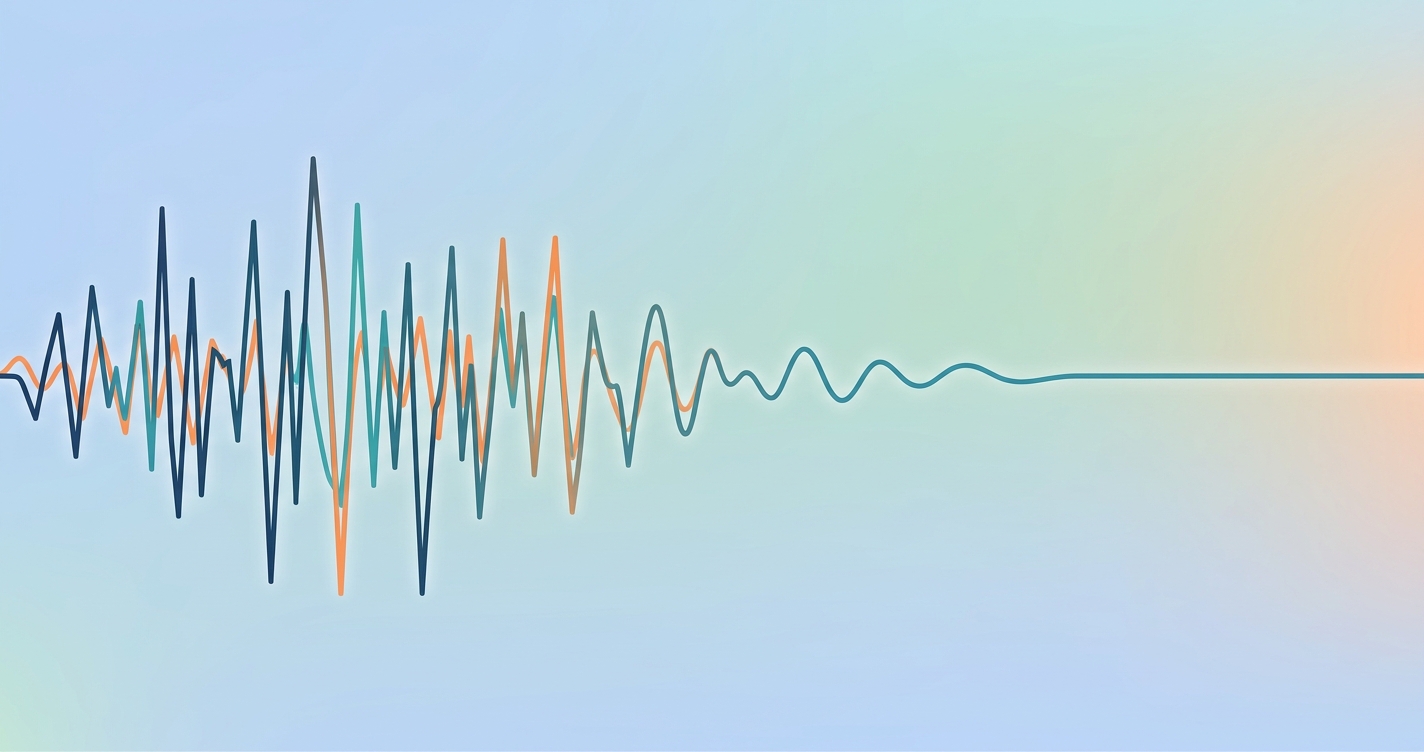
The core of the issue lies in distinguishing a true physiological baseline from temporary variations. A phone-based scan using remote photoplethysmography (rPPG) doesn't just take a single snapshot. It captures a continuous stream of data over a short period, typically 30 to 60 seconds. This data stream contains a wealth of information, not just a single heart rate or blood pressure number. The key to a reliable assessment is not to ignore the effects of stimulants or stress, but to algorithmically account for them.
The physiological effects of caffeine and anxiety are well-documented. Caffeine, a vasoconstrictor, can temporarily increase blood pressure and alter heart rate dynamics. Similarly, the body's acute stress response, often triggered by anxiety, releases hormones like adrenaline that elevate heart rate and blood pressure. Research from institutions like UCLA Health confirms that high doses of caffeine can exacerbate anxiety, creating a combined effect. Studies in the journal PLOS One have detailed how caffeine impacts vascular response, a key component of what rPPG technology measures. A system that cannot account for the potential of caffeine anxiety affecting an insurance health scan would be fundamentally unreliable. Modern digital underwriting platforms are designed with this reality in mind, employing sophisticated signal processing to isolate the stable, underlying cardiovascular signature from temporary "noise."
| Feature | Simple Snapshot Reading | Longitudinal Signal Analysis | | :--- | :--- | :--- | | Data Input | Single data point (e.g., one BP reading) | 30-60 second video stream | | Context | No context for applicant's state | Can identify and model transient spikes | | Resilience | Highly susceptible to transient effects | Robust to state-dependent "noise" | | Methodology | Static measurement | Dynamic signal processing & filtering | | Output | A single, absolute value | A calculated baseline from filtered data |
Industry applications for robust signal processing
For insurtech platforms, integrating vitals-based scoring requires confidence in the data source. The ability to normalize for transient states like pre-scan jitters or the morning's coffee is not a minor feature; it is fundamental to the system's validity and fairness.
Automated underwriting rules engines
A rules engine fed with noisy data will produce inconsistent outcomes. By using a vitals API that pre-processes the raw rPPG signal, CTOs can ensure their decision engines are working with data that reflects an applicant's baseline health, not their mood at the moment of the scan. This involves:
- Motion artifact removal: Algorithms identify and compensate for minor head movements that can distort the signal.
- Temporal segmentation: The system can analyze the data stream in chunks, down-weighting or discarding segments where signal quality is low or extreme outliers are detected.
- Frequency domain analysis: Techniques like Fast Fourier Transform (FFT) are used to separate the periodic pulse wave from high-frequency noise and low-frequency baseline wander.
Predictive modeling and risk stratification
For advanced predictive models, the richness of the signal is more important than a single data point. Instead of just a heart rate number, the model can be fed features of the entire pulse waveform, heart rate variability (HRV) indices, and measures of vascular compliance. These richer features are less susceptible to momentary anxiety because they represent deeper, more stable patterns in cardiovascular function.
Current research and evidence
The scientific foundation for this approach is robust. A scoping review published by the National Institutes of Health (NIH) on the use of photoplethysmography in mental health highlights the technology's ability to detect physiological responses to stress. The challenge, as outlined in multiple studies on rPPG artifact removal, is not detection but interpretation.
Researchers like W. J. G. Staal and colleagues (2020) have demonstrated advanced signal processing techniques, such as using wavelet transforms, to decompose the PPG signal and remove motion artifacts. While their focus was on motion, the same principles apply to other sources of noise. The system learns what a "clean" cardiac signal looks like and can filter out deviations that do not match this underlying pattern, whether they originate from the applicant shifting in their chair or from a momentary spike in heart rate. Independent Component Analysis (ICA) is another method frequently cited in the literature for its ability to separate the desired physiological source signal from other contaminating signals.
The future of dynamic health assessment
As digital underwriting matures, the focus is shifting from single-point-in-time assessments to more dynamic, longitudinal views of health. The technology that allows a system to distinguish between a panic attack and chronic hypertension is a precursor to platforms that can track health trends over time. For underwriting vendors and BPO providers, this means building systems that are not just data-acquisitive, but data-intelligent. The ability to handle state-dependent noise is the first step toward a more accurate and equitable generation of risk assessment tools.
Frequently asked questions
Q: I have an anxiety disorder. Will this automatically cause my application to be flagged? A: Not necessarily. The systems are designed to analyze the signal over a period of time. A brief spike in heart rate or blood pressure that is characteristic of anxiety or a panic attack will look very different from the sustained high readings associated with chronic hypertension. The algorithm's goal is to identify the applicant's stable baseline, not to penalize them for momentary stress.
Q: Should I avoid coffee before my scan? A: While it's always a good practice to follow the specific instructions provided, the technology is built to be resilient to common daily factors like caffeine intake. The analysis accounts for the typical physiological effects of stimulants. A single cup of coffee is highly unlikely to fundamentally alter the risk assessment, which is based on the entire profile of your cardiovascular signal, not just the heart rate at that instant.
Q: What happens if the scan detects a very erratic signal due to nerves? A: In cases where the signal quality is too low or the data is too erratic to establish a reliable baseline, the system would typically flag the scan for review or prompt the user to retake it. This is a quality control measure to ensure a fair assessment. The goal is not to "fail" an applicant for being nervous, but to ensure the system has enough high-quality data to make a sound determination.
The challenge of caffeine anxiety affecting insurance health scans is ultimately a signal processing problem. Advanced digital underwriting platforms are designed to solve this by looking beyond single data points and analyzing the entire signal signature to find the stable, underlying indicators of health. Circadify is at the forefront of developing and refining the APIs that make this possible. To see how our vitals API can normalize for state-dependent noise in your underwriting platform, explore our API docs and sandbox at circadify.com/custom-builds.