
Can insurers estimate my health risk from a short selfie video?
Explore how predictive underwriting vitals, derived from selfie videos using rPPG technology, are transforming insurance risk assessment and enabling real-time decisions.
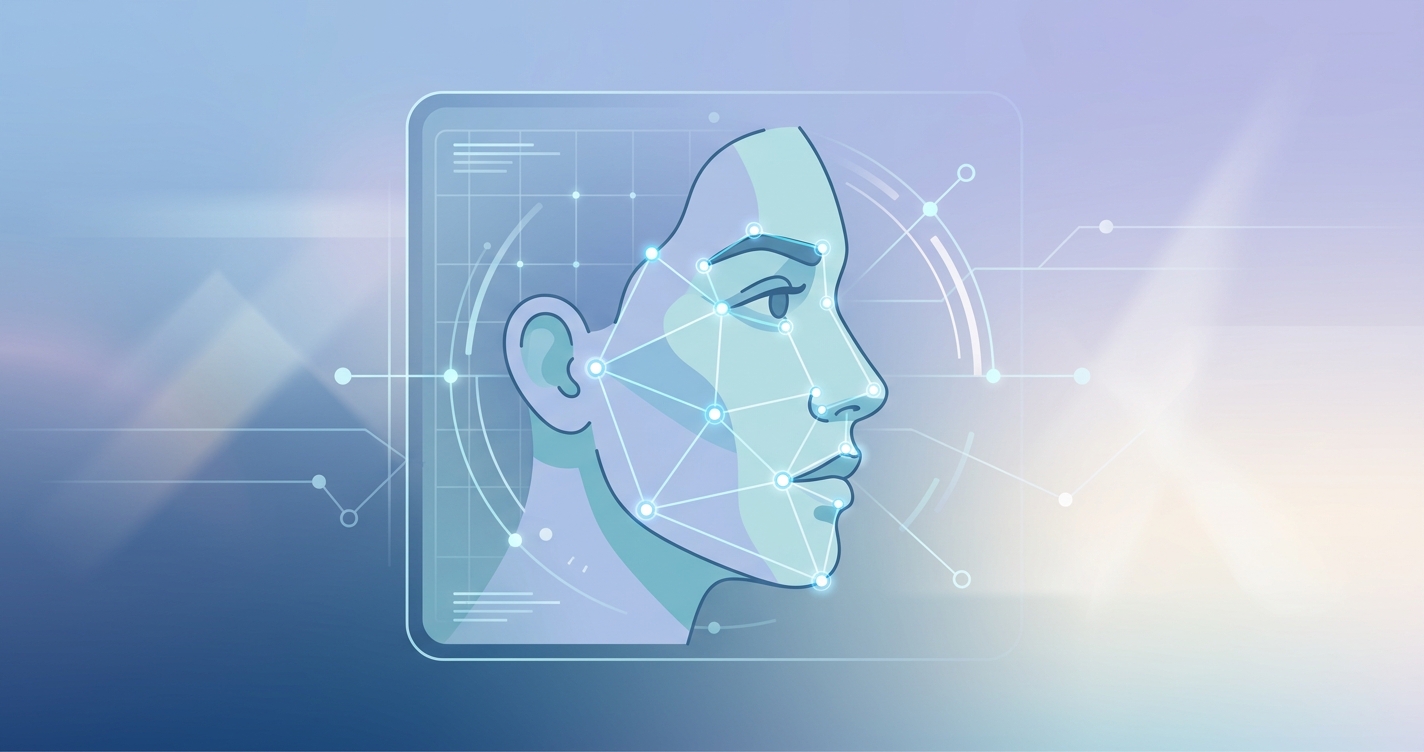
The question of how insurers can assess health risk from a short selfie video has shifted from speculative fiction to a present-day reality for a growing number of digital insurance platforms. The traditional, weeks-long underwriting process, often involving in-person exams and fluid samples, is being challenged by new technologies that can generate physiological data points in seconds. This shift is driven by the demand for faster, less invasive application experiences, particularly in the embedded insurance market. Central to this transformation is the use of predictive underwriting vitals derived from video streams, a method that is redefining the speed and data basis of risk assessment.
"By 2027, 60% of new individual life insurance policies sold in the U.S. and E.U. will be underwritten without any human involvement, up from less than 5% in 2022." - Gartner, 2023
The rise of predictive underwriting vitals
At the core of video-based health assessment is a technology called remote photoplethysmography (rPPG). This technique allows for the measurement of subtle changes in light reflected from the skin, which correspond to the blood volume pulse. By analyzing these imperceptible color variations with sophisticated algorithms, a device's camera can function as a medical sensor. It can estimate vital signs like heart rate, heart rate variability (HRV), respiratory rate, and even blood pressure.
For underwriting platforms, this data provides a real-time, objective snapshot of an applicant's physiological state. Instead of relying solely on historical data or applicant disclosures, insurers can now incorporate immediate biological markers into their decision engines. These predictive underwriting vitals serve as a powerful input for risk models, enabling a more nuanced and dynamic assessment than was previously possible with traditional, static methods. The goal is not to replace clinical diagnosis but to enhance risk stratification for underwriting purposes, allowing for faster and more automated policy decisions.
| Feature | Traditional Underwriting | Video-Based Vitals Assessment | | :--- | :--- | :--- | | Data Collection Method | Paramedical exam, blood/urine samples, MIB lookup | Short selfie video (~30-60 seconds) | | Applicant Experience | Invasive, time-consuming, requires scheduling | Contactless, fast, can be done from anywhere | | Time to Decision | Weeks to months | Seconds to minutes | | Key Data Points | Cholesterol, glucose, nicotine, prescription history | Heart rate, HRV, respiratory rate, blood pressure | | Operational Cost | High (examiner fees, lab costs) | Low (fully automated, requires no hardware) | | Fraud Detection | Relies on identity verification | Can include liveness detection, identifies deepfakes |
Industry Applications
For insurtech CTOs, BPO providers, and digital underwriting vendors, the integration of rPPG-based vitals represents a significant architectural and product opportunity. It moves the point of data collection to the very top of the funnel, enabling new workflows and product types.
Powering digital underwriting platforms
An API for predictive underwriting vitals can be integrated directly into a digital underwriting platform's rules engine. This allows for real-time risk segmentation. For example, an applicant with favorable vital signs could be routed to an automated, straight-through process, while an applicant with anomalies might be flagged for a more detailed review. This enhances the efficiency of the underwriting process without compromising risk management.
Enhancing embedded insurance products
For embedded insurance offerings, such as those integrated into financial planning apps or e-commerce checkouts, the customer experience is critical. A lengthy underwriting process creates friction and leads to high drop-off rates. Video-based vitals enable a "one-click" underwriting experience that aligns with consumer expectations for instant decisions.
Streamlining BPO workflows
Insurance Business Process Outsourcing (BPO) providers can use this technology to reduce per-file costs. By automating the initial health data capture, BPOs can minimize manual data entry and reduce the number of human touches required per application. This leads to greater operational efficiency and allows BPO staff to focus on higher-value tasks, such as handling complex cases flagged by the automated system.
Current research and evidence
The credibility of predictive underwriting vitals depends on their accuracy relative to established medical devices. The scientific community has been actively studying rPPG for over a decade, with a significant increase in validation studies in recent years.
- Heart Rate Accuracy: Research has consistently shown a high degree of accuracy for rPPG-derived heart rate. A study published in 2022 by researchers at the University of Pisa, Italy, involving patients with cardiovascular disease, found a mean absolute error of just 1.06 bpm for rPPG compared to traditional ECG readings.
- Blood Pressure and Other Vitals: Estimating blood pressure from video is more complex, as it relies on detecting pulse wave transit time and other subtle features. While still an active area of research, studies are showing progress. For example, research by G. V. R. K. Varma and U. S. N. Raju (2022) explored machine learning models for BP estimation from rPPG signals, demonstrating the feasibility of the approach. However, accuracy levels for blood pressure are currently more moderate than for heart rate and vary based on the algorithms and calibration methods used.
- Challenges: Researchers are focused on improving the robustness of rPPG algorithms across different populations, skin tones, lighting conditions, and user movements. Work by Wim Verkruysse, a pioneering researcher in this field from the University of Southern California, has been instrumental in understanding the optical properties of skin that make rPPG possible.
The future of video-based risk assessment
The trajectory for video-based health assessment points toward broader capabilities and deeper integration into underwriting workflows. As machine learning models become more sophisticated and are trained on larger datasets, the accuracy and range of measurable vitals will likely expand. We can expect to see more robust estimations for blood pressure and potentially the inclusion of other biomarkers like blood oxygen saturation (SpO2) and even hemoglobin levels.
The future of predictive underwriting vitals is not just about replacing the paramedical exam but about creating a continuous, data-rich environment for risk assessment. For insurers, this technology provides the tools to build more dynamic, responsive, and competitive products. For platform vendors and CTOs, it is a foundational component of the next generation of digital insurance infrastructure.
Frequently asked questions
Q: How is the accuracy of video-based vitals validated? A: Accuracy is validated through clinical studies comparing rPPG measurements to those from gold-standard medical devices like ECGs for heart rate and arterial lines for blood pressure. These studies measure metrics like mean absolute error (MAE) and Pearson correlation coefficients to establish clinical equivalence.
Q: What are the data privacy implications of using selfie videos? A: Data privacy is a primary design concern. Leading platforms process the video stream in real-time and discard the video file immediately after the analysis. The only data stored is the resulting vital signs measurements, which are treated as sensitive health information and handled according to HIPAA and GDPR standards.
Q: Can this technology replace traditional underwriting entirely? A: For many low-risk applicants seeking lower face-value policies, video-based vitals combined with other data sources can enable fully automated underwriting. For higher-risk or high-value policies, it is more likely to be used as a triage tool, accelerating the process for most applicants while flagging complex cases for human review.
The shift to real-time, data-driven underwriting is well underway. Circadify is at the forefront of this change, providing the API infrastructure to integrate contactless health screening into any digital insurance platform. To learn how you can use our technology and explore our sandbox, visit our custom builds page at circadify.com/custom-builds.