
Embedded Insurance Health Check: Your Next Competitive Advantage
Discover how an embedded insurance health check acts as a strategic differentiator for digital underwriting platforms, boosting instant issue conversion rates.
The race to own the customer checkout experience has transformed digital distribution models across the financial sector. What began as adding simple trip cancellation policies to airline tickets has expanded into complex life and health products offered directly within partner ecosystems. However, as product complexity scales, the friction of traditional risk assessment becomes a severe operational bottleneck. Implementing an embedded insurance health check at the point of sale provides a critical mechanism for balancing instant issue speed with actuarial integrity. For insurtech CTOs, underwriting system vendors, and business process outsourcing (BPO) architects, integrating real-time health data capture is no longer merely a feature request; it is a core structural component of modern insurtech competitive strategy. The ability to assess risk dynamically while the user is actively engaged in a transaction separates legacy carriers from digital-first market leaders.
"In 2024, approximately 47% of individual life applications processed by surveyed carriers were eligible for an accelerated underwriting path, utilizing non-traditional data to bypass traditional medical exams and reduce decision times from weeks to minutes." - National Association of Insurance Commissioners (NAIC), Regulatory Guidance on Accelerated Underwriting (2024)
The economics of an embedded insurance health check
As the global embedded insurance market projects a compound annual growth rate exceeding 20% to reach USD 1 trillion by 2033 (Grand View Research, 2023), carriers and system vendors face immense pressure to optimize the conversion funnel. Point of sale underwriting relies heavily on the premise that an applicant can receive a firm offer without abandoning the session. When the product is a guaranteed issue policy with low face value, basic demographic data often suffices. But for higher face value life or health products, the lack of concrete medical data forces actuaries to assume maximum risk, leading to uncompetitive premiums that drive consumers away.
By embedding a real-time health check directly into the digital underwriting platform, carriers acquire immediate physiological data. This allows for predictive underwriting vitals to inform the automated decision engine before the user navigates to another tab or application. The integration of instant, remote health data bridges the gap between fast but expensive guaranteed issue products and slow but accurately priced fully underwritten policies. For the consumer, it feels like a seamless extension of the onboarding process. For the insurer, it represents a massive reduction in customer acquisition costs and a significant improvement in risk-adjusted margins.
| Capability | Traditional Guaranteed Issue | Embedded Health Check Flow | |---|---|---| | Data Acquisition | Static demographic inputs and self-disclosure | Dynamic physiological signals captured via device | | User Friction | Low | Low (typically completed in under 60 seconds) | | Pricing Precision | Broad risk pools, higher premium costs | Stratified risk, highly competitive personalized premiums | | Underwriting Speed | Instant | Instant to near-instant data processing | | Fraud Mitigation | Limited identity checks | High (inherent liveness detection and presence verification) | | Actuarial Confidence | Low | Moderate to High based on real-time biometric inputs |
Integrating an underwriting risk scoring API into the checkout flow introduces several systemic advantages for platform architects and product managers:
- Reduces application drop-off by keeping the applicant securely within the original purchase environment without routing them to third-party medical portals.
- Provides actuarial teams with objective, measurable data to justify dynamic pricing models and policy adjustments.
- Enables instant issue insurance for a significantly broader demographic by refining the baseline mortality risk estimate.
- Shifts the architectural burden from rigid legacy policy administration systems to agile, API-first middleware that scales with transaction volume.
- Eliminates the logistical costs and scheduling delays associated with deploying physical paramedical examiners to a consumer's home.
Architectural considerations for digital underwriting platforms
For insurtech CTOs, bolting a new data source onto an existing digital underwriting platform requires careful architectural planning. The traditional policy admin system was built to ingest static PDFs, attending physician statements, and batch files from laboratory networks. It was not designed to handle real-time, asynchronous JSON payloads containing predictive underwriting vitals generated during a live user session.
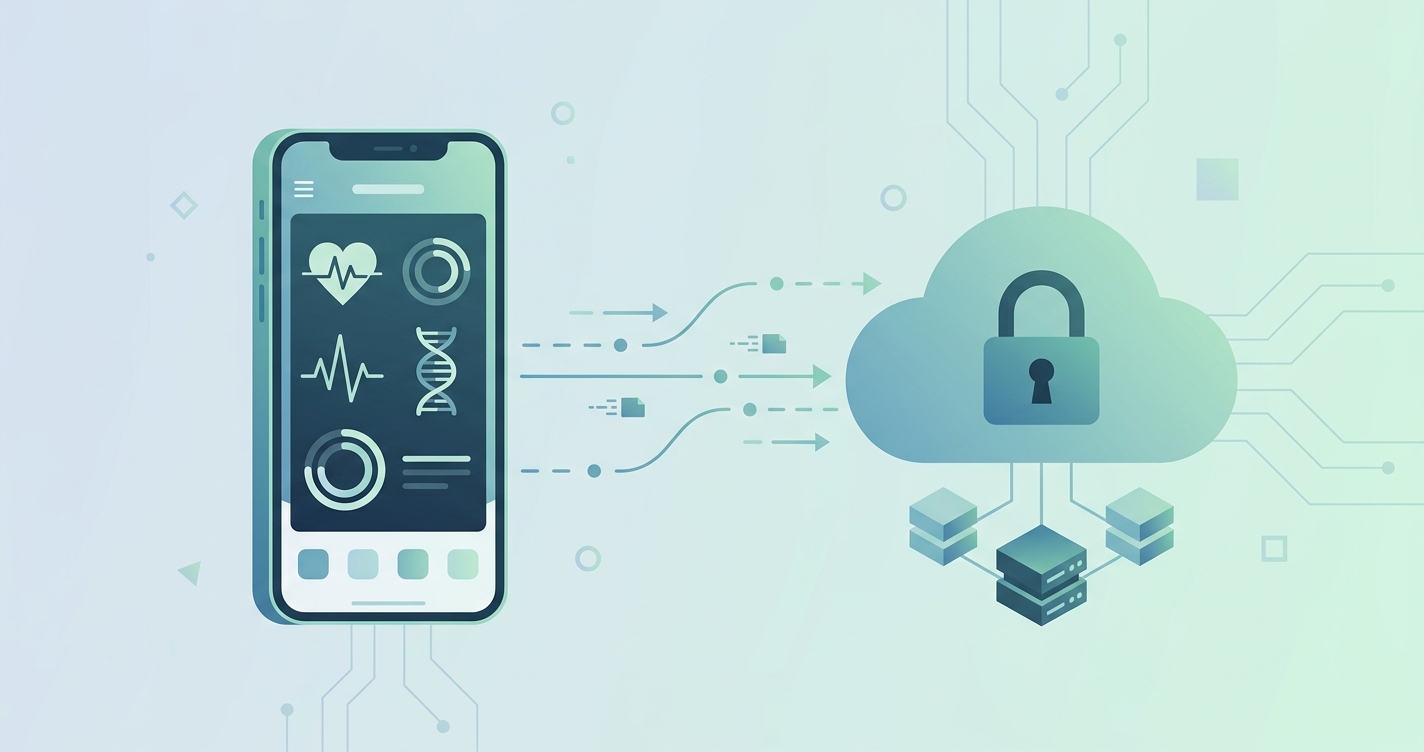
To successfully deploy an embedded insurance health check, the architecture must support microservices and decoupled decision engines. When a user initiates a health scan on their smartphone via a retail partner's app, the camera captures raw data and sends it to an underwriting risk scoring API. This API processes the information and returns a risk score or specific vital estimations. The digital underwriting platform must consume this payload, cross-reference it with the user's demographic inputs and rules engine, and return a binding quote back to the partner's front-end interface, all within a matter of seconds.
Failure to optimize this data flow results in high latency, which destroys the primary value proposition of point of sale underwriting. Therefore, robust insurance health data integration demands highly available infrastructure, rigorous payload modeling, and strict compliance with data privacy regulations depending on the jurisdiction and the specific nature of the data collected.
Industry applications and integration models
Retail and E-Commerce Partnerships
Large retail platforms are increasingly acting as comprehensive financial hubs for their customer base. Offering life insurance alongside a major life event purchase, such as financing a crib, buying a home, or purchasing a wedding ring, requires seamless technological execution. An embedded health scan allows the retail partner to offer a binding insurance quote instantly. By utilizing the consumer's own device camera to measure baseline vitals during the checkout process, the retailer adds massive value without disrupting the primary e-commerce transaction.
Wealth management and digital banking
Digital banks and wealth management applications possess the user trust required to cross-sell high-value life insurance products. However, sending a high-net-worth client to a clunky third-party portal to schedule a physical paramedical exam introduces unacceptable friction that often kills the sale. Embedded finance health strategies allow the entire risk assessment process to happen natively within the banking app. The user completes a brief biometric scan, the bank's digital underwriting platform processes the data, and the policy is issued and funded directly from the user's connected accounts.
BPO and Third-Party Administration
Business Process Outsourcing (BPO) providers managing overflow underwriting for major carriers are rapidly adopting digital platforms to increase their case throughput and lower operational costs. Integrating an automated health check reduces the time human underwriters spend waiting for attending physician statements on marginal cases. By automating the collection of predictive underwriting vitals, BPOs can triage applications more effectively, routing low-risk individuals to straight-through processing while reserving human expertise for highly complex medical histories.
Current research and evidence
The shift toward alternative data sources in underwriting is well documented and supported by large-scale industry analysis. A 2024 Life Insurance Mortality Risk Management Study conducted by LexisNexis Risk Solutions, which analyzed data from over 50 million individuals between 2018 and 2022, concluded that combining medical and non-medical data dramatically improves applicant evaluation speed and accuracy.
The LexisNexis research demonstrated that specific segments within traditionally high-risk populations, such as individuals managing certain chronic conditions, can exhibit average or better-than-expected mortality risks when evaluated with highly granular data. This makes them highly suitable for accelerated underwriting tracks that might otherwise reject them based on broad demographic assumptions.
By relying on an insurance health data integration that captures real-time physiological indicators, actuaries can build predictive models that align perfectly with these findings. The objective of an embedded insurance health check is not to provide a clinical diagnosis of disease, but rather to confidently place an applicant into a standardized risk tier using remote data collection. This actuarial confidence is what ultimately allows carriers to expand their instant issue insurance offerings to a wider segment of the population without taking on outsized financial risk.
The future of embedded finance health
As consumer comfort with digital health tracking tools continues to grow, the expectation for instant, personalized financial products will follow closely behind. The next iteration of point of sale underwriting will likely see underwriting risk scoring APIs becoming as ubiquitous as digital payment gateways. Digital underwriting platforms that fail to support real-time health data ingestion will find themselves unable to compete for major embedded distribution partnerships with top-tier consumer brands.
In the near future, the convergence of embedded finance and digital health will enable dynamic policy pricing that adjusts based on continuous or periodic health check-ins. For now, the focus remains firmly on the acquisition phase. The architectural decisions made today by insurtech CTOs regarding API flexibility, payload structures, and vendor partnerships will heavily determine market share in the coming decade. Carriers that master the embedded insurance health check will secure a massive competitive advantage, acquiring healthier customer cohorts at a fraction of traditional acquisition costs.
Frequently asked questions
What is an embedded insurance health check? An embedded insurance health check is a streamlined digital process integrated directly into a consumer application, such as a banking app or retail checkout flow. It assesses an applicant's health risk in real-time, frequently utilizing smartphone camera technology to estimate vital signs, entirely removing the need for a physical medical exam.
How does this technology impact instant issue insurance? By providing immediate, objective physiological data at the point of sale, a remote health check allows automated underwriting engines to confidently issue policies instantly. This prevents the applicant from being routed to a manual review queue, which historically causes high rates of application abandonment.
What are the technical requirements for integration? Successful integration requires a modern, agile digital underwriting platform capable of making asynchronous calls to an external underwriting risk scoring API. The platform must be able to process the resulting JSON payload, cross-reference it with existing underwriting rules, and return a decision within the strict latency constraints of a live consumer checkout session.
Is the data captured used for clinical diagnosis? No. The biometric data captured during an embedded insurance health check is used strictly for risk stratification, identity verification, and actuarial modeling. It is designed to evaluate mortality or morbidity risk for pricing purposes, not to diagnose medical conditions or provide clinical advice to the user.
As insurers push for faster issuance and more competitive pricing, the underlying technology must adapt to capture richer data without adding user friction. Circadify is directly addressing this space by providing the real-time vitals-based risk scoring API necessary for modern digital underwriting platforms. For product leaders and CTOs looking to enhance their embedded insurance offerings, exploring the technical documentation is the first step toward building a more profitable conversion funnel. Review the API docs and access the sandbox at https://circadify.com/custom-builds to schedule a strategy session.