
Will my 10-year-old sports injury affect my life insurance approval?
How modern digital underwriting platforms read a past injury insurance health check, weigh resolved conditions, and turn long-term health data into risk scores.
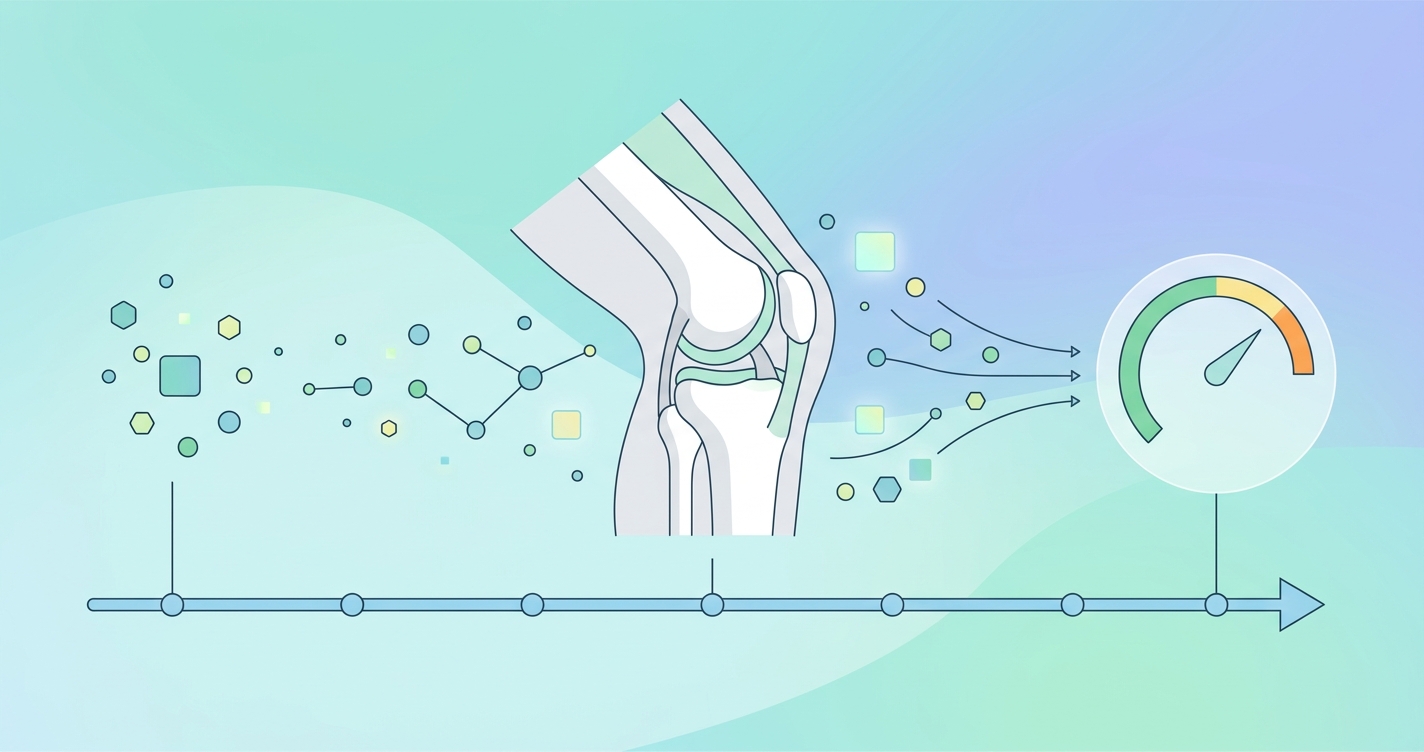
A decade-old torn ACL or a fractured collarbone from a weekend rugby match feels, to the applicant, like ancient history. To an underwriting engine, it is a data point that has to be located, dated, classified, and either discounted or scored. For the platform teams building those engines, a past injury insurance health check is one of the trickiest categories of historical data to handle well, because the signal degrades over time and the raw record rarely says whether the injury actually resolved. Getting this right is less about medical opinion and more about how a system models the difference between an event that happened and a risk that persists.
"Underwriting standards are evolving, with insurers increasingly incorporating non-medical data alongside medical history to create a more complete risk profile." - The Standard, Underwriting Guide (2023)
The economic stakes are not small. Musculoskeletal disorders are repeatedly identified as the single most common cause of long-term disability claims, which means the way a platform interprets old orthopedic events directly affects loss ratios. The challenge for an insurtech CTO is that a 10-year-old sports injury and a 10-year-old chronic back condition can look almost identical in a flat medical history field, yet they carry completely different mortality and morbidity implications.
How a past injury insurance health check is actually scored
When an underwriting platform processes a past injury insurance health check, it is not asking "did this person get hurt." It is trying to answer three separate questions: is the condition resolved, is there residual impairment, and is there evidence of recurrence or comorbidity. A clean ACL reconstruction with full return to sport ten years ago is, in risk terms, close to a non-event. The same injury followed by chronic pain, opioid prescriptions, repeat imaging, and reduced range of motion is a different file entirely.
Traditional underwriting handled this through manual review and a small set of decision categories. According to The Standard's 2023 underwriting guidance, insurers translate these findings into outcomes such as standard rates, table ratings (incremental surcharges, for example a 50 percent increase at Table 2), flat extras (a fixed charge per thousand dollars of coverage for a set number of years), or postponement until the condition stabilizes. The LIA Guide to Medical Underwriting for Life Insurance, 2024 edition, similarly frames resolved acute injuries as low-impact once recovery is documented and durable.
The hard part for platform builders is durability of the signal. A surgical event from ten years ago might surface in pharmacy data, an electronic health record, an attending physician statement, or simply a disclosure form. Each source has a different freshness, a different structure, and a different reliability. The table below outlines how these signals typically behave.
| Data source | Captures past injury well? | Tells you if it resolved? | Latency to retrieve | Best engineering use | | --- | --- | --- | --- | --- | | Self-disclosure form | Sometimes (recall bias) | Rarely | Instant | Triage flag, follow-up trigger | | Electronic health records | Yes (coded events) | Partially (if follow-up coded) | Hours to days | Event confirmation, severity coding | | Pharmacy / prescription history | Indirectly | Yes (ongoing pain meds signal residual) | Minutes to hours | Recurrence and chronicity detection | | Attending physician statement | Yes (detailed) | Yes | Days to weeks | Edge-case adjudication | | Real-time vitals capture | No (not historical) | Yes (current functional state) | Seconds | Present-day risk confirmation |
The last row is the one platform teams often overlook. A historical record tells you what happened; a current vitals reading tells you how the applicant is doing now. For a resolved injury, present-day physiological signals are frequently the cleaner evidence that the event no longer carries weight.
Why old injuries break naive data pipelines
Historical injury data exposes weaknesses in how a digital underwriting platform models time. A few recurring failure modes show up across implementations:
- Date ambiguity. Many records capture when an injury was treated, not when it occurred or when recovery completed. Without a resolution timestamp, the engine cannot apply duration-based discounting.
- Severity flattening. A fracture, a sprain, and a spinal fusion may all map to the same broad category in a poorly normalized schema, erasing the gradient that actually drives risk.
- Comorbidity blindness. An old injury matters far more when paired with obesity, smoking, or a desk-bound recovery. Treating the injury in isolation misses the interaction.
- Recurrence signals buried in pharmacy data. Ongoing analgesic refills are often the strongest indicator that a "resolved" injury is anything but, yet they sit in a separate feed from the diagnosis.
- Recall bias in self-disclosure. Applicants under-report or misremember old events, so a platform that leans only on questionnaires inherits noisy ground truth.
The practical lesson is that an old sports injury is rarely a single attribute. It is a small cluster of correlated signals that a well-designed scoring layer should reconcile rather than read literally.
Industry applications for platform teams
Carrier and MGA underwriting engines
For carriers running accelerated or fluidless programs, historical injuries are a common reason files drop out of straight-through processing into manual review. A scoring layer that can confidently classify a resolved orthopedic event as low-impact keeps more applicants in the automated lane, which is exactly where Gen Re's 2023 U.S. Individual Life Accelerated Underwriting Survey shows the cost and conversion advantages concentrate.
Underwriting system vendors
Vendors selling into multiple carriers cannot hard-code one carrier's rating philosophy. The durable pattern is a normalized health-event model with configurable severity and duration rules, so each tenant can decide how aggressively to discount a ten-year-old injury without forking the pipeline.
BPO and exam-replacement providers
For BPO operators replacing paramedical exams, the value is combining a thin historical record with a present-day functional read. A past injury insurance health check that pairs documented event history with current vitals lets reviewers close files that would otherwise need a costly physician statement.
Current research and evidence
The research consensus is that resolved acute injuries carry far less long-term weight than chronic musculoskeletal conditions, but that the two are easily confused in unstructured data. The Standard's 2023 guidance emphasizes objective measures such as range of motion, nerve involvement, chronic pain levels, and ongoing treatment as the variables that separate a benign history from a rated one. Industry analysts at Insurance Thought Leadership, writing on the new era of life underwriting, point to the same shift: combining medical history with broader behavioral and physiological data produces a more complete profile than any single source.
On the technology side, 2024 trend reporting summarized by Insurtech Insights and FinTech Global describes underwriting moving from static, point-in-time assessment toward continuous, data-rich scoring driven by machine learning. Wearable and vitals data are repeatedly cited as the input that converts a stale historical record into a present-tense risk picture. For an old injury, that distinction is decisive: the diagnosis is history, but the applicant's current cardiovascular and functional state is what the policy is priced against.
The evidence also cautions against over-engineering. Pharmacy data and coded follow-ups already answer the recurrence question for a large share of cases. The marginal value of an expensive physician statement is real only for the genuine edge cases, which a good scoring layer should isolate rather than treat as the default.
The future of past-injury risk assessment
Three directions look durable. First, duration-aware modeling will become standard, with engines explicitly tracking time since resolution rather than time since diagnosis. Second, historical and real-time data will fuse: the old injury sets a prior, and a current vitals-based health check updates it. Third, explainability will tighten under regulatory pressure, so platforms will need to show why a decade-old injury did or did not move a score. The systems that win will treat an old sports injury not as a permanent black mark but as a decaying signal that present-day evidence can overwrite.
Frequently asked questions
Does a fully recovered injury from ten years ago usually raise life insurance premiums? Often it does not. When records and present-day data show full recovery with no residual impairment or ongoing treatment, most underwriting frameworks treat the event as low-impact and apply standard or near-standard rates.
How does a platform tell a resolved injury from a chronic condition? It looks for follow-up signals: ongoing pain prescriptions, repeat imaging, reduced function, or coded chronic diagnoses. Absence of those over a multi-year window is strong evidence the injury resolved, which is why pharmacy and EHR feeds matter as much as the original diagnosis.
Should historical injury data be weighted differently over time? Yes. Duration since resolution is a core variable. A scoring layer that discounts events by elapsed time, then confirms current status with vitals data, models real-world risk more accurately than one that treats any past injury as a fixed penalty.
Can current vitals data offset an old injury on file? For resolved conditions, present-day physiological readings frequently provide the cleanest evidence that the historical event no longer drives risk, which is why combining historical records with a real-time health check is becoming common practice.
Circadify is building toward exactly this problem space: a real-time, vitals-based risk scoring API that complements historical health data so platforms can confirm whether a decade-old injury still matters today. Teams evaluating how to fuse long-term records with present-day signals can review the API docs and try the sandbox at circadify.com/custom-builds.