
I just turned 50 — does a phone health check make my premium spike?
For insurtech platforms, assessing a 50-year-old applicant presents a classic challenge. Discover how vitals-based data can refine age-based assumptions.
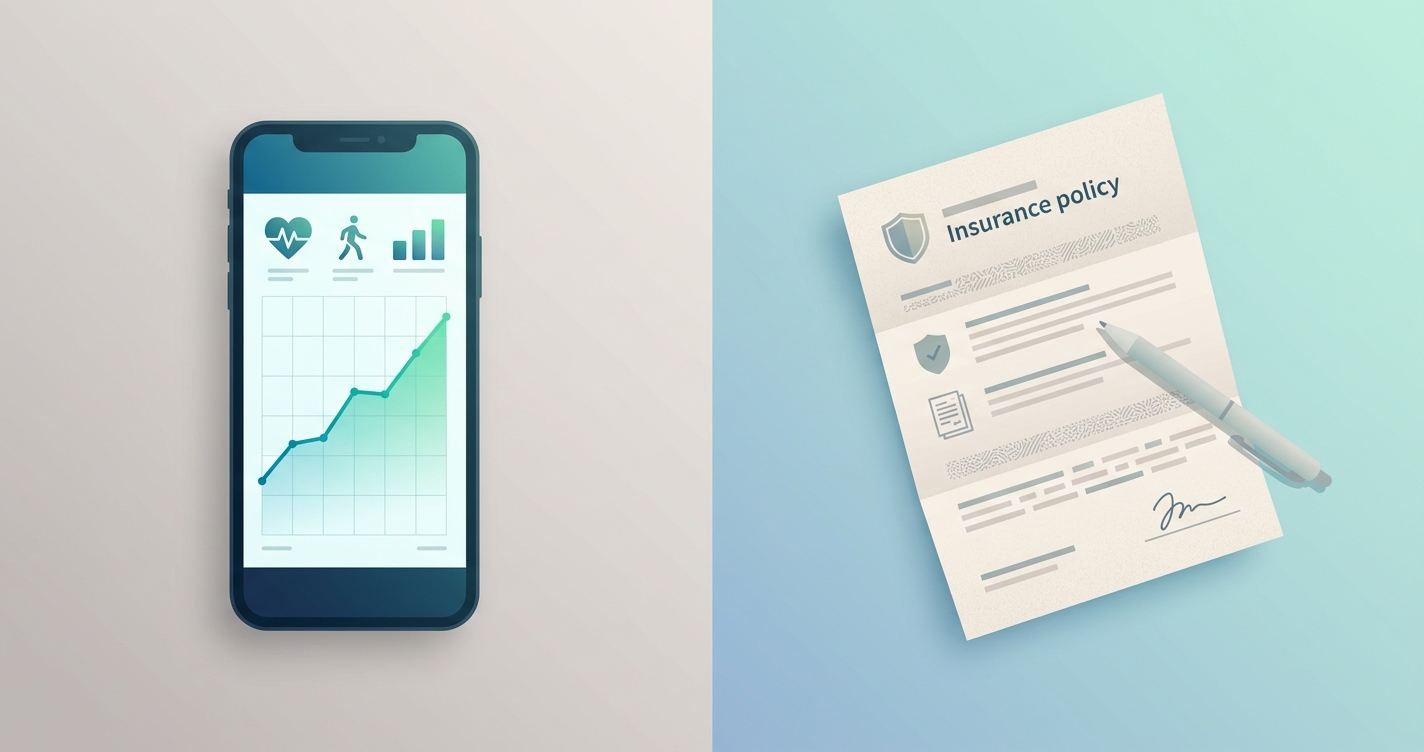
For underwriting system vendors and the insurtech platforms they serve, the 50th birthday represents a critical inflection point in risk modeling. Historically, this milestone places applicants into a higher-risk category based on decades of actuarial data. This age-based segmentation, while foundational to traditional underwriting, often fails to account for individual variations in health. As platforms increasingly adopt accelerated underwriting pathways, the central challenge becomes how to price risk accurately for the 50-plus demographic without resorting to coarse, and potentially alienating, age-based assumptions. The integration of real-time physiological data offers a solution, allowing models to look beyond chronological age and assess a more accurate, individualized measure of biological risk.
"A comprehensive meta-analysis of 32 studies and over 38,000 participants confirmed that lower Heart Rate Variability (HRV) parameters predict higher mortality across different ages, sexes, and populations, establishing it as a powerful, independent risk predictor." (Parvaneh, S. et al., 2022, MIDUS study)
The mispricing of risk: a phone health check premium at age 50
The core issue with traditional underwriting is its reliance on static, demographic data as a primary proxy for an applicant's health. For an individual who just turned 50, actuarial tables will invariably assign a higher mortality risk compared to a 49-year-old, often triggering a significant premium increase. This model assumes that all 50-year-olds present a similar risk profile, an assumption that is efficient for mass-market pricing but lacks granularity. This creates a market inefficiency: healthy 50-year-olds are overcharged, while unhealthy 50-year-olds may be under-priced relative to their true risk. The discussion around a phone health check premium at age 50 is not about penalizing applicants but about correcting this pricing inefficiency with more precise data.
A phone-based health check, utilizing remote photoplethysmography (rPPG), introduces a stream of dynamic, physiological data that was previously unavailable in a scalable format. This technology uses a standard smartphone camera to detect subtle changes in skin color, which correspond to blood flow. From these signals, it is possible to derive key vital signs that are highly correlated with cardiovascular health and all-cause mortality. For an underwriting API, this means the risk assessment for a 50-year-old applicant can be augmented with data points like resting heart rate, heart rate variability (HRV), and estimations of blood pressure. This allows the underwriting model to differentiate between a 50-year-old with the cardiovascular health of a 40-year-old and one whose physiological data aligns with a higher-risk profile.
| Feature | Traditional Underwriting Model | Vitals-Augmented Underwriting Model |
| :--- | :--- | :--- |
| Primary Age Factor | Chronological Age (50) | Biological Age (Inferred from vitals) |
| Key Data Inputs | Age, Gender, Smoker Status, MIB Report | Age, Gender, Smoker Status + rPPG-derived vitals (HR, HRV, SpO2) |
| Risk Segmentation | Broad age band (e.g., 50-55 years) | Fine-grained, based on health score percentile |
| Model Outcome | Standard rate for the 50+ age bracket | Personalized rate based on individual health metrics |
| Healthy 50-Year-Old | Priced at the standard for the age cohort, potentially overcharged. | Receives a preferred rate that offsets the age factor. |
| Unhealthy 50-Year-Old | May be underpriced if unknown conditions exist. | Accurately rated based on biometric indicators. |
| API Payload Example | {"age": 50, "smoker": false} | {"age": 50, "vitals": {"hr": 61, "hrv_sdnn": 58}} |
This shift does not discard age as a variable but contextualizes it. The model can learn that a low resting heart rate and high HRV are more predictive of lower mortality risk than the simple fact of being 50 years old.
Industry Applications
For CTOs and system architects at underwriting and BPO firms, integrating this new class of data requires careful consideration.
Integrating vitals into existing rules engines
Most underwriting platforms operate on a set of rules that map inputs to decisions (approve, decline, refer). Vitals data can be incorporated as a new set of inputs.
- Initial Step: Use vitals as a triage signal. For a 50-year-old applicant, exceptional vitals could route them to a "fast track" approval path, bypassing certain manual reviews.
- Advanced Integration: Feed the vitals data directly into a predictive model that generates a "health score." This score becomes a new, powerful variable in the rules engine, capable of modifying the premium calculation based on the output.
Mitigating Adverse Selection in the 50+ Cohort
Vitals-augmented underwriting directly addresses adverse selection. Healthy individuals who feel they are being unfairly priced based on age are more likely to abandon the application process. By offering them a rate that reflects their positive health indicators, platforms can increase conversion rates in this valuable demographic. Conversely, it ensures that higher-risk applicants are not inadvertently offered premiums that fail to cover their expected costs.
Current research and evidence
The use of rPPG and associated vitals for risk assessment is supported by a growing body of scientific work. Research has firmly established the link between heart rate variability and mortality. A meta-analysis published in 2022, pooling data from over 38,000 individuals, found that HRV was a significant predictor of mortality, independent of other factors. Earlier work by researchers like Dekker et al. (2000) for the Autonomic Nervous System and Its Relationship with All-Cause Mortality and Cardiovascular Events (ARIC) study also showed that reduced HRV was a predictor of new-onset coronary heart disease.
While traditional insurance medical exams for applicants over 50 might include an EKG, rPPG technology makes the scalable collection of cardiovascular data feasible for every applicant. Validation studies are a key part of this process. For example, a study registered on ClinicalTrials.gov (NCT07502703) is currently validating rPPG-derived cardiovascular parameters against standard clinical measurements and risk scores, demonstrating the industry's move toward certifiable accuracy.
The future of age-agnostic underwriting
The introduction of vitals data is the first step toward a more dynamic and fair underwriting paradigm. The next horizon is longitudinal analysis. Imagine an underwriting platform that doesn't just take a single snapshot of an applicant's health but can, with user consent, ingest data over time. A 50-year-old applicant could demonstrate a stable or improving health trend over several months, providing a wealth of data for the risk model. This would allow the system to move beyond a point-in-time decision and build a continuous, evolving risk profile. This capability transforms the insurance product from a static contract to a dynamic partnership, where positive health behaviors can be directly and mathematically rewarded. For platform vendors, offering this capability is a significant differentiator in a competitive market.
Frequently asked questions
Q: How does a phone health check differentiate biological from chronological age?
A: It uses vital signs like heart rate variability (HRV) and resting heart rate as proxies for cardiovascular and systemic health. These metrics can indicate a level of health (biological age) that is better or worse than the average for an applicant's chronological age, allowing for a more precise risk assessment.
Q: What does the data payload from a vitals scan look like for an underwriting API?
A: Typically, it is a JSON object containing key-value pairs for each measured vital (e.g., "hr": 65, "hrv_sdnn": 52), often accompanied by quality or confidence scores for each measurement and a timestamp. This structure is designed for easy ingestion by automated rules engines and predictive models.
Q: Can this technology reduce the need for paramedical exams for applicants over 50?
A: Yes, for a significant segment of the 50+ population. By providing robust, objective health data upfront, phone-based health checks allow underwriting platforms to straight-through-process more applicants with confidence. It helps triage and reserve more intensive and costly exams for only those applicants who present a complex or high-risk profile based on the initial scan.
The challenge of accurately pricing risk for applicants at traditional age milestones is shifting from a demographic problem to a data problem. Circadify is at the forefront of providing the tools to solve it, enabling underwriting platforms to integrate the real-time health data necessary for a new generation of predictive models. To see how chronological age and real-time vitals can be combined in a modern risk scoring engine, explore the API documentation and sandbox at circadify.com/custom-builds.