
Can I use my smart watch data to get a discount on my new life insurance?
How smart watch data for insurance discount programs feeds digital underwriting platforms, and what insurtech CTOs need to know about wearable data integration.
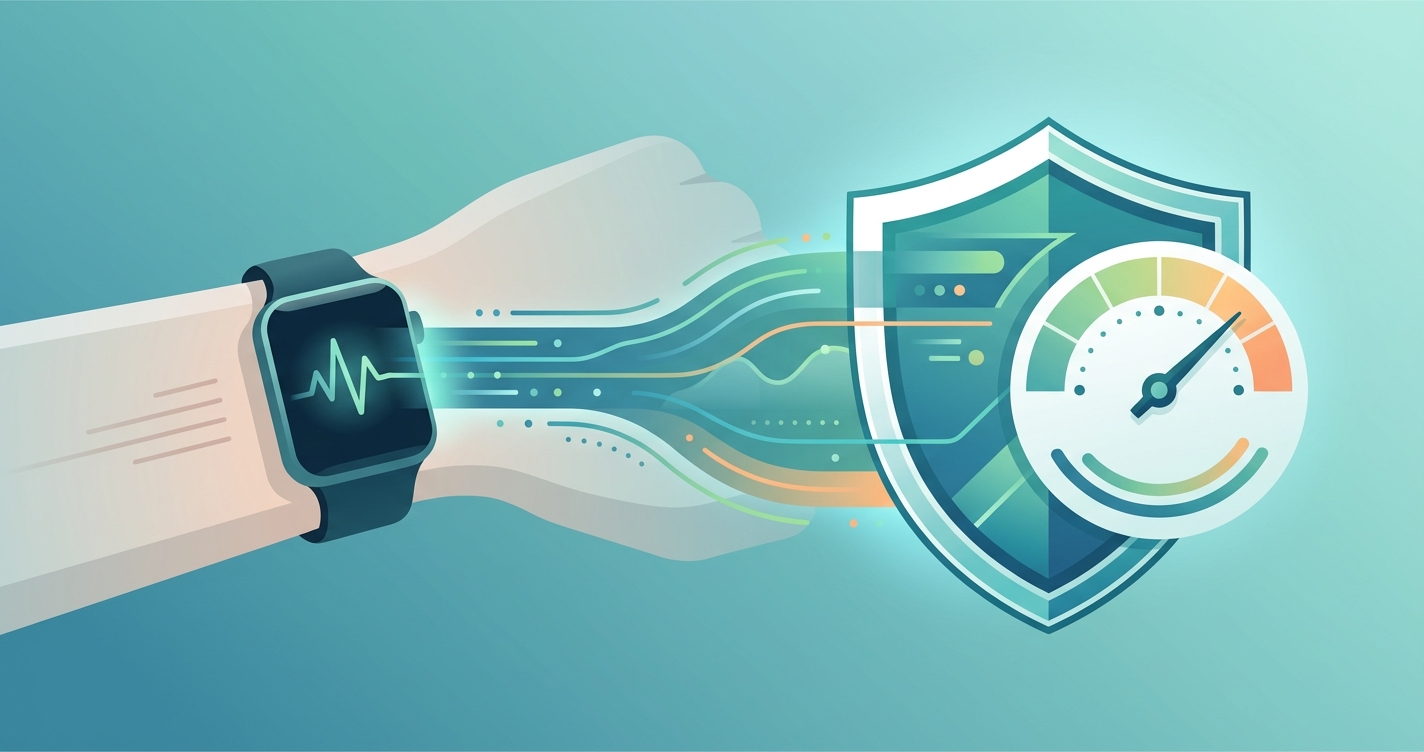
Consumers increasingly ask a deceptively simple question at the point of sale: can the watch already on my wrist earn me a cheaper premium? For the engineers building modern underwriting systems, that question is not about marketing. It is an architecture problem. Using smart watch data for an insurance discount means ingesting continuous, noisy, consent-bound signals from devices the carrier does not control, normalizing them against actuarial models, and turning them into a defensible risk decision in seconds. The appetite is real, the evidence base is maturing, and the integration work is where most programs either scale or stall.
Over 54.5% of US consumers say they are willing to share wearable data with a life insurer for a more tailored policy, with financial savings (56.6%) cited as the leading motivation, according to 2024 consumer research summarized by LIMRA and life insurance industry surveys.
What "smart watch data for insurance discount" actually means for underwriting
When an applicant offers their wearable history, they are rarely handing over a single number. A typical consumer device streams step counts, resting and active heart rate, heart rate variability, sleep stages, and sometimes blood oxygen or ECG-derived rhythm flags. None of these map directly to a mortality table. The value sits in derived behavioral and physiological features: average daily steps over 90 days, peak cadence, resting heart rate trend, and adherence consistency.
A digital underwriting platform has to do three things with that raw feed. First, authenticate the data source and the consent scope. Second, transform device-specific payloads into a vendor-neutral feature set. Third, route those features into a risk scoring model alongside, not instead of, traditional evidence. The discount is the visible output. The underwriting risk scoring API doing the translation is the part that determines whether the program is reliable.
For insurance health data integration, the hard truth is that wearable data is supplementary signal, not a replacement for identity-verified vitals. It works best when combined with a point-in-time measured baseline. That distinction shapes everything downstream, from data contracts to how aggressively a carrier is willing to price a discount.
Comparing data sources for a wearable-driven discount
Underwriting architects evaluating wearable programs are really comparing data sources on reliability, latency, and fraud resistance. The table below frames the main options a digital underwriting platform might combine.
| Data source | Signal type | Reliability for underwriting | Latency | Fraud / spoofing risk | |-------------|-------------|------------------------------|---------|------------------------| | Consumer smart watch history | Behavioral + physiological trend | Moderate, needs normalization | Instant once shared | Higher (account sharing, synthetic data) | | On-demand camera-based vitals scan | Measured point-in-time vitals | High when captured live | Seconds | Lower (liveness-verifiable) | | Traditional paramedical exam | Fluids + clinical measures | High | Days to weeks | Low | | Electronic health records | Diagnosed conditions, history | High | Hours to days | Low | | Self-reported questionnaire | Declared behavior | Low | Instant | Highest |
The pattern most teams converge on is layered: a live measured baseline establishes identity and current state, wearable history adds a longitudinal behavioral dimension, and EHR or prescription data confirms medical context. A discount becomes credible when at least two independent sources agree.
Key considerations when scoring wearable contributions:
- Treat continuous data as a trend, not a snapshot. A single low resting heart rate proves little; a stable 90-day pattern carries weight.
- Weight adherence and data completeness explicitly. Sparse or intermittent data should reduce confidence, not silently default to favorable scoring.
- Separate the discount logic from the risk model. The model estimates risk; product and pricing teams decide how much of that signal converts to a premium reduction.
- Plan for asymmetry. Most regulators and carriers allow wearable data to lower a price, but using it to penalize raises consent and fairness questions.
Industry Applications
Accelerated and dynamic underwriting
The most direct application is widening the eligibility window for accelerated underwriting. Munich Re research on next-generation data sources notes that physical activity data from wearables can refine mortality risk segmentation and help identify low-risk applicants who might otherwise be routed to a full exam. For a digital underwriting platform, that means more straight-through processing and fewer expensive paramedical referrals.
Ongoing engagement and rewards
Beyond the initial decision, wearable feeds enable dynamic programs where premium credits or rewards adjust with sustained activity. This shifts the carrier relationship from a one-time assessment to a continuous one. Architecturally, this requires an event-driven pipeline that can re-score periodically without re-underwriting the whole policy.
Embedded and partner channels
When insurance is sold inside a fitness app, bank, or retailer, the wearable connection is often already authorized. An embedded insurance health check can request scoped access to existing device data, reducing friction at signup. The integration challenge moves to consent management and token handling across partner boundaries.
Current research and evidence
The evidence that wearable-derived activity predicts mortality is now substantial. A 2022 UK Biobank study led by researchers analyzing accelerometer data from roughly 78,500 adults found that higher daily step counts, up to about 10,000 steps, were associated with lower all-cause, cardiovascular, and cancer mortality over a median seven-year follow-up. Step intensity, measured as peak-30 cadence, added predictive value beyond total volume. Those are exactly the kinds of features a risk model can operationalize.
A 2023 systematic review on wearable activity data for life insurance underwriting, published in Insurance: Mathematics and Economics, examined the practical barriers: data heterogeneity across devices, missingness, consent durability, and the gap between population-level associations and individual pricing. The review's conclusion is one underwriting architects should internalize. The predictive signal is real, but turning it into individualized, defensible pricing requires careful modeling and governance rather than naive thresholds.
Industry partnerships reinforce the direction. Reinsurers and analytics firms have publicly partnered to build wearable-informed pricing models, and existing wellness-linked programs already use activity data to offer premium incentives. The consistent message across the actuarial literature is that wearable data complements measured vitals and medical history, sharpening segmentation rather than standing alone.
What the research does not yet settle is anti-selection. Applicants who volunteer wearable data are likely healthier on average, so a discount funded purely on shared data can be self-selecting in ways that distort the book. Robust programs model that selection effect explicitly.
The Future of smart watch data for insurance discount
The trajectory points toward continuous underwriting, where a policy is priced once and then refined as verified signal accumulates. Several shifts will define the next phase.
- Standardized health data payloads. As FHIR-aligned and vendor-neutral schemas mature, the cost of onboarding a new device source drops, and portability across carriers improves.
- Liveness and provenance verification. Expect stronger requirements that wearable data be cryptographically tied to a verified individual to counter account sharing and synthetic data.
- Hybrid baselines. A measured vitals capture at application, paired with longitudinal wearable trends, will likely become the credibility standard for offering a meaningful discount.
- Transparent scoring. Regulatory pressure on algorithmic fairness will push platforms to explain how wearable features influenced a price, which favors modular, auditable risk scoring APIs.
For insurtech CTOs, the practical takeaway is to build for source-agnostic ingestion now. The winning architecture is not the one tied to a single watch brand. It is the one that treats any consented health signal, wearable or measured, as a feature feeding a single, governable scoring layer.
Frequently asked questions
Can wearable data alone qualify someone for a life insurance discount?
Rarely on its own. Most credible programs pair wearable trends with a verified baseline measurement or medical evidence. Wearable history adds a behavioral dimension, but identity-verified, point-in-time data is what anchors the decision against fraud and anti-selection.
What wearable metrics matter most for underwriting risk scoring?
Daily step volume, step intensity or cadence, resting heart rate trend, heart rate variability, and sleep consistency are the most studied. Underwriting models value sustained trends over single readings, and they weight data completeness as part of confidence.
How should a digital underwriting platform handle device data variability?
Normalize at ingestion. Transform each device's payload into a vendor-neutral feature set, flag missing or sparse data, and attach a confidence score. The risk model should consume standardized features, not raw device-specific formats, so adding a new source does not require rebuilding the model.
Is using wearable data to lower a premium different from using it to raise one?
Yes, substantially. Lowering a price on shared favorable data is broadly accepted and consent-friendly. Using wearable data to increase a premium raises fairness, disclosure, and regulatory questions, so most programs design wearable contributions as upside-only.
Circadify is building toward exactly this layered model, offering a real-time vitals-based risk scoring API that lets a digital underwriting platform combine measured baselines with consented data sources under one scoring layer. Teams evaluating how to operationalize smart watch data for insurance discount programs can review the API documentation and try the sandbox at circadify.com/custom-builds.