
Underwriting Risk Scoring API: Best Practices for Error Handling
Discover robust error handling strategies for your underwriting risk scoring API. Learn how to manage failed health scans and build resilient integrations.
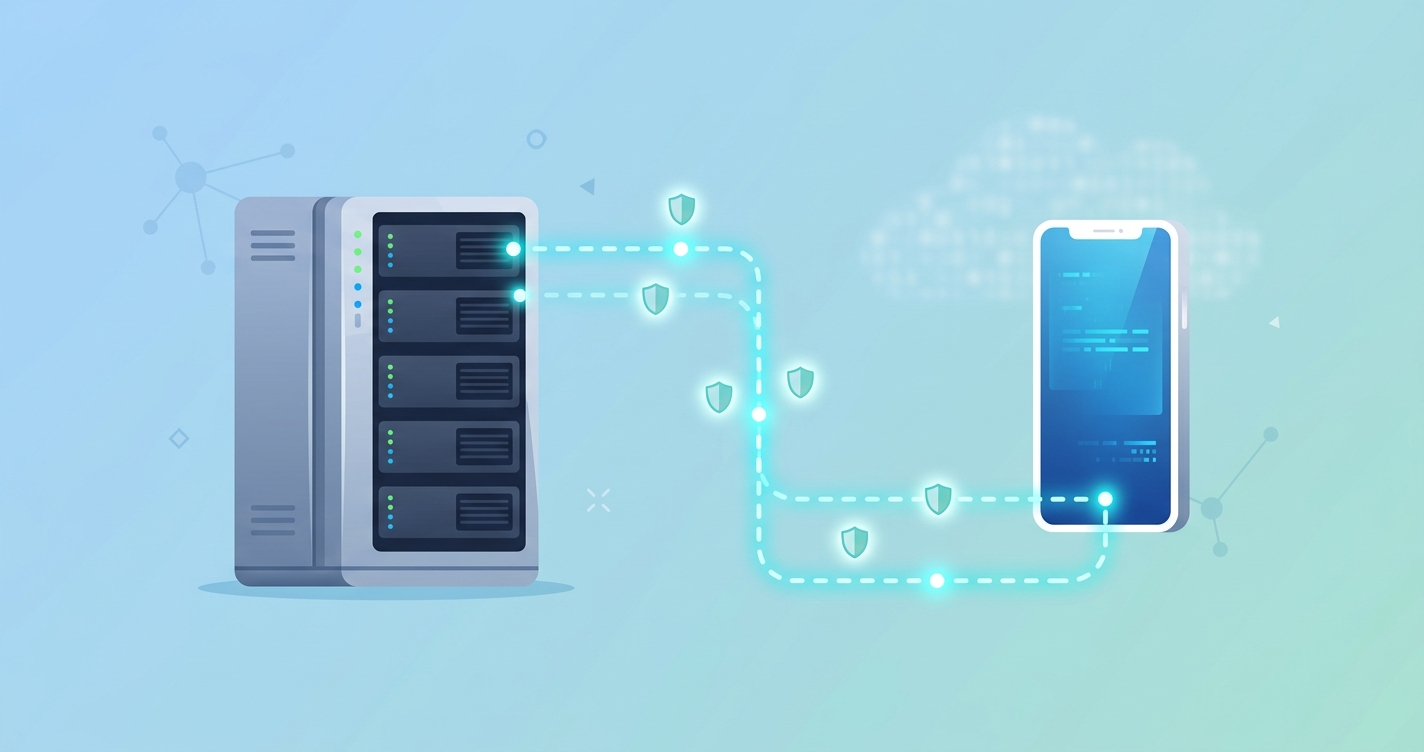
Insurtech engineering teams evaluating digital underwriting platforms often focus their initial testing on the ideal scenario, a policy applicant completes a seamless health check, the payload transfers perfectly, and a decision engine instantly prices the risk. But for chief technology officers and system architects, the true test of an integration is how it behaves when the real world intervenes. An applicant might receive a phone call mid-scan. A localized network outage can drop a packet. An older mobile device may struggle to compress a video payload. In these moments, an underwriting risk scoring API must do more than simply return a 500 Internal Server Error; it must gracefully handle the failure, preserve the applicant's session, and provide the policy administration system with an actionable fallback path.
"Commercial insurance API connectivity has been shown to cut quote failures by up to 79%, but this efficiency relies entirely on resilient integration architecture that anticipates and absorbs real-world data friction rather than passing raw errors directly to the user."
Why the underwriting risk scoring API needs resilient architecture
Building an underwriting risk scoring API that can withstand the chaos of consumer-generated data requires a shift from synchronous, binary thinking (success or failure) to an asynchronous, fault-tolerant model. Traditional life insurance workflows were largely batch-processed; if a paramedical exam file was corrupted, a case manager simply emailed the vendor the next day to request a resend. Today, a failed health scan or an incomplete payload during an embedded insurance checkout can result in immediate cart abandonment.
To prevent these drop-offs, developers must build data pipelines that categorize errors instantly. Is the failure a transient network issue that requires a background retry? Is it a hard schema validation error that requires user intervention? Or is it a partial success where some vitals were captured but others failed due to lighting? This technical distinction determines whether the system pushes the applicant forward, asks for a quick rescan, or routes the application to a human underwriter.
| Error Handling Strategy | Trigger Condition | Technical Response | Impact on Applicant Experience | | :--- | :--- | :--- | :--- | | Exponential Backoff Retry | Transient 5xx server errors, rate limiting (429). | Pauses and retries the request with increasing delays. | Invisible to the user; seamless continuation. | | Circuit Breaker | Repeated timeouts or continuous 500 errors from the scoring engine. | Halts all API calls to the failing service for a set duration. | Triggers fallback workflow; avoids infinite loading screens. | | Graceful Degradation | Partial payload success (e.g., heart rate captured, but respiration failed). | Accepts valid data and flags missing fields for manual review. | Allows the applicant to complete the digital checkout without starting over. | | Schema Validation Catch | Corrupted data format or missing required header tokens. | Blocks the request at the gateway before hitting the core engine. | Prompts the user instantly to check their connection or device. | | Dead Letter Queue (DLQ) | Persistent asynchronous payload processing failures. | Stores the failed payload for later developer inspection. | Application moves to manual underwriting queue seamlessly. |
Core technical strategies for managing failed health scans
When an applicant attempts a digital health check, the payload generated is often complex, containing time-series data or compressed video frames. Handling errors during this ingestion phase requires specific architectural patterns tailored to high-density information.
Implementing strict idempotency
Because mobile networks are unreliable, an applicant's device might successfully send a payload but fail to receive the resulting 200 OK response. This often prompts the client application to send the exact same data again. An integration must be strictly idempotent.
- If the system processes the same payload twice, it should return the identical risk score.
- The system must not create duplicate policy records.
- The vendor must not be charged for two separate API calls. Idempotency keys generated client-side ensure that retries are safe and do not corrupt the underwriting database.
Tuning timeouts and circuit breakers
In an embedded insurance flow, an applicant will only wait a few seconds for a decision. If the risk scoring engine is experiencing latency, waiting 30 seconds for a timeout will destroy the conversion rate.
- Set explicit, aggressive timeouts (e.g., 3 to 5 seconds) for the initial scoring request.
- Implement a circuit breaker pattern: if the API fails or times out three times in a row, the circuit "opens."
- Once open, all subsequent requests bypass the API and instantly route to a fallback mechanism, giving the scoring service time to recover.
Managing asynchronous processing
For complex predictive models that require deeper analysis, synchronous API calls are a liability. Instead of forcing the client application to keep a connection open while the server processes a scan, architecture should utilize an asynchronous webhook model. The API immediately returns a 202 Accepted status, and once the risk scoring is complete, the server pushes the result to a predetermined webhook URL. If the webhook delivery fails, the system logs the error and attempts delivery via a robust queueing system with exponential backoff.
Industry applications: fallbacks and graceful degradation
The insurance industry cannot afford to lose a customer just because a specific predictive model failed to execute perfectly. This is where graceful degradation becomes critical for insurtech platforms trying to balance data collection with user experience.
The incomplete vitals payload
A common scenario in remote health assessments is the incomplete scan. An applicant might sit in an environment with poor lighting, allowing the software to estimate a resting heart rate accurately but failing to capture adequate data for respiration rate or heart rate variability. Rather than rejecting the entire application, the integration should return a partial success response. The platform can then use a rules engine to determine if the captured data is sufficient for the specific product being underwritten. A guaranteed issue policy might accept the partial data, while a fully underwritten term life policy might trigger a prompt asking the user to adjust their lighting and try again.
Dynamic routing to manual underwriting
When all automated retries fail, the system must degrade gracefully to a traditional workflow. If a failed scan cannot be resolved, the API should package whatever metadata was captured, device type, error logs, user demographics, and push it to a human underwriter's queue. The applicant sees a message stating, "Your application is under review," rather than a confusing technical error code. This ensures the acquisition cost spent to get the applicant to the checkout is not wasted.
Current research and evidence
The financial implications of poorly integrated insurance systems are staggering. According to a 2023 industry report by Genasys, the global insurance sector spends approximately $210 billion annually on IT, but 87% of that spending, roughly $183 billion, is allocated to maintaining existing legacy systems and patching poorly designed integrations. Only 13% is utilized for genuine digital transformation.
This technical debt directly impacts the reliability of digital underwriting workflows. Research demonstrates that insurers running duplicate systems or relying on brittle, point-to-point connections face operating costs up to four times higher than those utilizing consolidated, modern API gateways. Furthermore, inadequate error handling and fragmented data architectures force human underwriters to spend 30% to 40% of their time on administrative tasks, such as tracking down missing files or manually overriding system errors. Conversely, when insurance platforms implement robust API connectivity with proper error monitoring, quote failure rates can be reduced by up to 79%, ensuring a smoother path from application to bound policy.
The future of underwriting risk scoring apis
As the volume of health data ingested by insurance carriers grows, the methods for handling errors will become increasingly intelligent. Engineering teams are moving away from static, hard-coded timeout rules toward predictive, machine-learning-driven API gateways.
Future risk scoring architectures will monitor network conditions and device capabilities in real time before the applicant even begins a scan. If the gateway detects a high-latency connection, it might instruct the client application to compress the payload more aggressively or switch to a lighter-weight predictive model on the edge device itself. Furthermore, self-healing data pipelines will become standard. Instead of a developer manually reviewing a queue of failed API calls, automated systems will analyze the root cause of the failure, restructure the payload if necessary, and re-inject it into the scoring engine without human intervention. This proactive approach will nearly eliminate the visible friction that currently limits digital health integrations.
Frequently asked questions
What is idempotency in the context of an underwriting API? Idempotency ensures that making the same API request multiple times produces the same result as making it once. In underwriting, this prevents a user's device from accidentally creating duplicate policy applications or triggering multiple billing events if a network drop causes the application to resend a health scan payload.
How do circuit breakers protect an insurance policy administration system? A circuit breaker monitors the failure rate of calls to a third-party scoring service. If the service experiences an outage and begins failing consistently, the circuit breaker stops sending requests, preventing the internal policy administration system from wasting resources on doomed calls and allowing it to immediately trigger an alternative workflow.
What is the difference between a transient error and a hard error? A transient error is temporary, such as a brief network interruption or a sudden spike in server traffic; these can usually be resolved by automatically retrying the request. A hard error involves structural issues, such as a malformed JSON payload or missing authorization credentials, which will never succeed on retry and require immediate developer or user correction.
Why should health data APIs use asynchronous processing? Analyzing complex biometric data or video frames can take several seconds. If the API uses synchronous processing, the user's browser must wait with an open connection, increasing the risk of a timeout. Asynchronous processing immediately accepts the data and processes it in the background, sending the result via a webhook when it is ready.
Handling failed health scans and incomplete biometric payloads requires more than basic error catching; it requires an architecture built specifically for the nuances of digital health data. Circadify is actively building in this space, providing robust infrastructure designed to absorb data friction and keep digital underwriting processes moving smoothly. For insurtech CTOs and developers looking to integrate resilient, real-time vitals scoring into their platforms, explore our technical documentation and sandbox environment at circadify.com/custom-builds.