What health data do insurers check before approving me?
A research-style report on the evolving sources of insurance underwriting health data, from traditional exams to real-time digital signals for risk scoring.
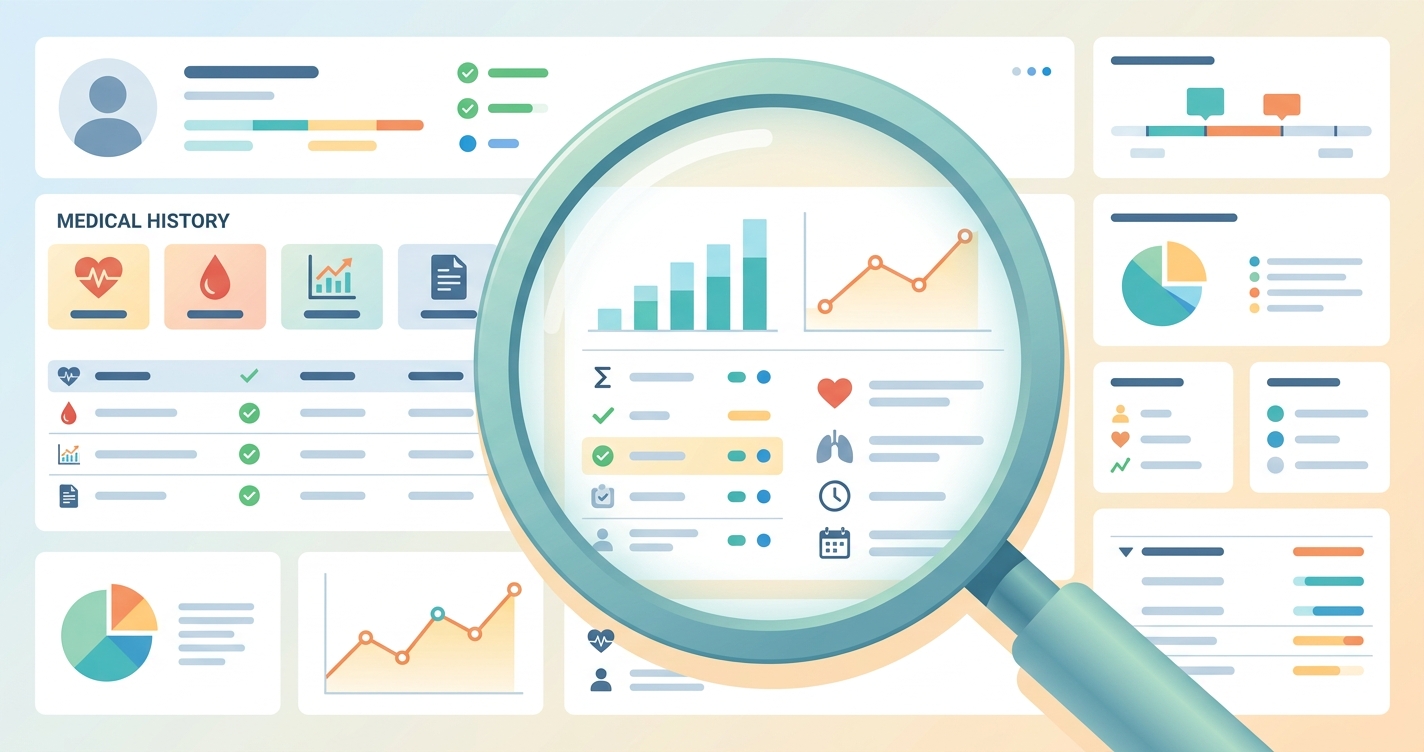
The landscape of insurance underwriting is undergoing a fundamental transformation, shifting from a reliance on static, historical applicant data to a dynamic model that incorporates a much broader spectrum of information. For insurtech platforms, vendors, and business process outsourcing (BPO) providers, understanding this shift is not just about keeping pace-it's about building the infrastructure for the next generation of risk assessment. Where underwriting was once a lengthy process involving paper forms and manual reviews, it is now becoming a high-speed, data-driven function where the right insurance underwriting health data is the primary determinant of speed and accuracy.
"According to a 2024 survey by Gen Re, a global reinsurance provider, an average of 59% of individual life applications now qualify for an accelerated underwriting path, bypassing many traditional requirements."
The expanding scope of insurance underwriting health data
The core task of underwriting-to accurately price risk-has not changed, but the tools and data available to achieve it have. The industry is moving beyond the confines of the application questionnaire and the Attending Physician Statement (APS). While these traditional sources remain relevant for complex cases, they are increasingly augmented or replaced by more immediate and extensive digital data streams. This evolution is driven by the need for faster, more efficient processing, reduced costs, and a better customer experience. For platform developers and CTOs, the key challenge is integrating these disparate sources into a cohesive and predictive underwriting rules engine.
The modern insurance underwriting health data ecosystem now includes everything from national prescription databases to public records, creating a multi-dimensional view of an applicant's risk profile in near-real-time. This allows carriers to segment applicants more effectively, fast-tracking low-risk individuals through automated or accelerated paths while flagging higher-risk cases for more detailed review.
| Feature | Traditional Underwriting Data | Digital Underwriting Data | | :--- | :--- | :--- | | Primary Sources | Attending Physician Statements (APS), Paramedical Exams, Blood/Urine Tests, MIB Reports | Electronic Health Records (EHR), Pharmacy Data (Rx), Medical Claims Data (Dx), Motor Vehicle Records, Public Records, Digital Vitals | | Data Type | Static, Point-in-Time | Dynamic, Longitudinal | | Collection Method | Manual requests, physical appointments, applicant disclosure | API-driven, database queries, third-party data providers (e.g., Milliman IntelliScript) | | Processing Speed | Weeks to Months | Seconds to Minutes | | Predictive Power | Established but limited to historical health events | High; capable of identifying trends and behavioral patterns | | Operational Cost | High per-applicant cost | Low transactional cost, high initial integration investment |
Industry Applications
For technology leaders in the insurance space, the diversification of insurance underwriting health data presents both a challenge and an opportunity. Building a platform that can ingest, normalize, and analyze this information is critical for competitive differentiation.
Integration with underwriting platforms
Modern underwriting decision engines must be built with robust and flexible APIs. The ability to connect seamlessly with a variety of third-party data vendors is no longer optional. This includes:
- Database Lookups: Services like the Medical Information Bureau (MIB) and pharmacy benefit managers (via platforms like Milliman's IntelliScript) provide instant access to an applicant's history.
- EHR/EMR Connectivity: While still a developing area, direct access to Electronic Health Records offers the most comprehensive view of clinical history.
- Emerging Data Streams: Platforms must be architected to handle novel data types, such as real-time physiological data captured via remote scanning technologies.
Predictive modeling and risk scoring
The value of new data sources lies in their application within predictive models. By analyzing longitudinal pharmacy data, for example, an insurer can identify not just a diagnosed condition but also infer the severity and treatment adherence, which are powerful predictors of long-term health outcomes. This allows for more granular risk scoring than is possible with a simple medical diagnosis from an APS.
Straight-through processing (stp)
The ultimate goal for many carriers is to achieve straight-through processing for a significant portion of applications. This is only possible when the insurance underwriting health data is comprehensive and trustworthy enough to feed an automated decision engine without the need for human intervention. The reliability of the underlying data sources is the primary enabler of STP.
Current research and evidence
The move toward digital data is backed by a growing body of evidence. Reinsurance giants, who have a vested interest in the long-term accuracy of underwriting, are at the forefront of this research. A 2024 survey from Gen Re, for instance, highlighted that the majority of life insurance applications are now eligible for accelerated underwriting paths, a direct consequence of carriers gaining confidence in data-driven risk assessment.
Similarly, research from Munich Re has shown that combining electronic health records with pharmacy and medical claims data provides a lift in predictive accuracy over using claims data alone. This confirms the hypothesis that more data, when properly analyzed, leads to better risk segmentation. The key finding is that different data sources often provide complementary signals, and a multi-modal approach to data ingestion is superior.
The future of insurance underwriting health data
The trajectory of underwriting data is pointed firmly towards more real-time, applicant-generated, and behavior-based information. Wearable technology, while still nascent in underwriting, offers a glimpse into a future where continuous data streams could inform dynamic risk models.
More immediately, technologies that allow for the secure and permissioned capture of health vitals-such as heart rate, blood pressure, and respiratory rate-through a standard smartphone camera are entering the market. These "digital vitals" bridge the gap between a full paramedical exam and a data-only assessment, providing objective, real-time measurements that can validate applicant disclosures and significantly enhance the accuracy of risk scoring for digital underwriting platforms.
Frequently asked questions
Q: What is the Medical Information Bureau (MIB) and what data does it have? A: The MIB is a member-owned corporation that operates a secure system for exchanging coded information among life and health insurance companies in the United States and Canada. When you apply for insurance, the insurer can check MIB for reports on medical conditions or hazardous hobbies you may have disclosed in previous applications. It is designed to protect insurers from fraud and misrepresentation.
Q: Do I have to consent to insurers accessing my pharmacy or medical records? A: Yes, insurers are required to obtain your consent before accessing personal health information like pharmacy records (Rx data), medical claims history, or electronic health records. This is typically done through an authorization form during the application process, and your rights are protected under laws like the Health Insurance Portability and Accountability Act (HIPAA).
Q: Can these new data sources lead to more accurate and fairer insurance premiums? A: That is the primary goal. By gaining a more complete and nuanced picture of an individual's health and risk profile, insurers aim to move beyond broad risk categories. The theory is that this can lead to more personalized pricing, where healthy individuals are not subsidizing higher-risk individuals in the same cohort. However, this also raises important industry conversations around data privacy, algorithmic bias, and regulatory oversight.
The transition to digital underwriting is not just about technology; it's about building trust and demonstrating value to all stakeholders. For platform builders, the ability to integrate and interpret a wide array of insurance underwriting health data is the new frontier of innovation. Circadify is actively working in this space, providing the tools necessary to integrate novel, real-time health data into any digital underwriting workflow. To learn more about building with our risk scoring APIs, explore our documentation and sandbox at circadify.com/custom-builds.