
Why does my life insurer want a 60-second health scan?
Insurers are adopting accelerated underwriting using contactless health scans to improve efficiency and customer experience. Learn how this technology is changing risk assessment.
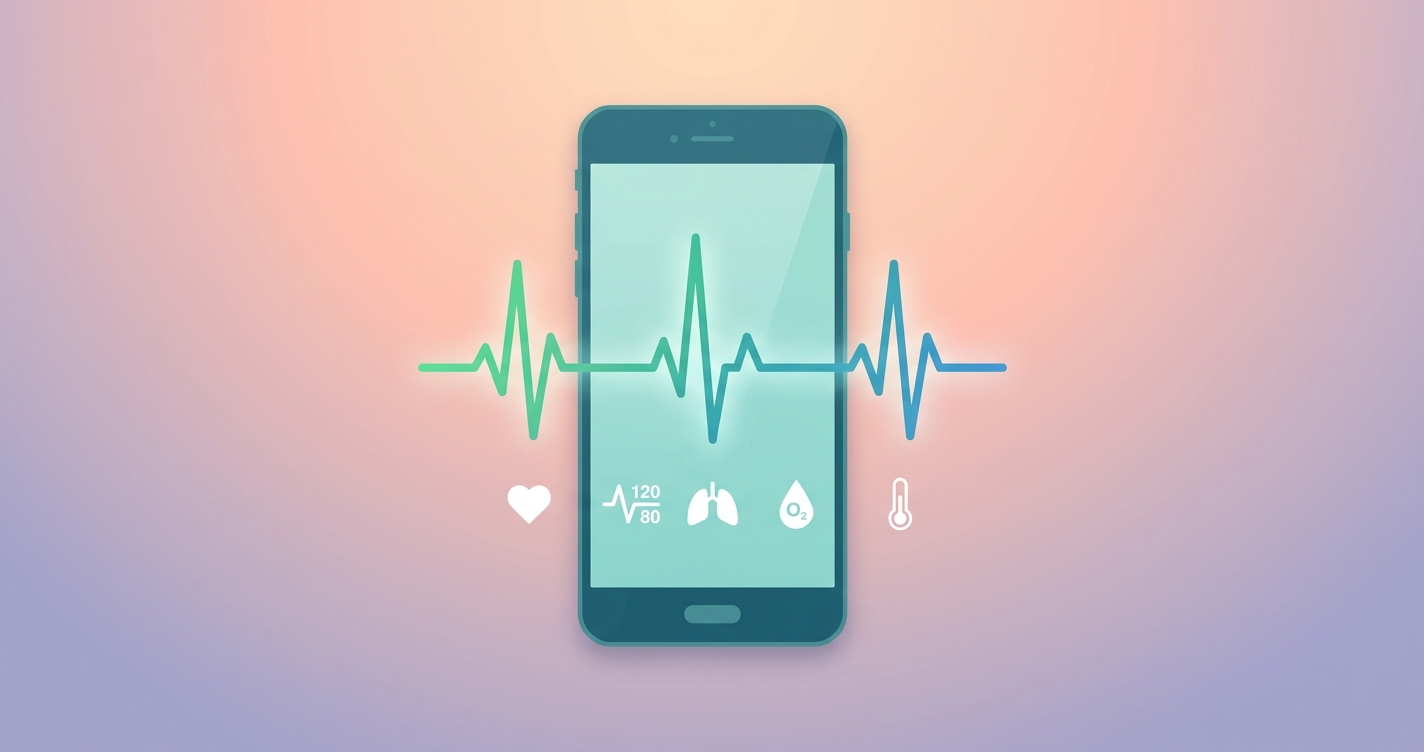
The life insurance application process, once synonymous with lengthy paperwork and invasive medical exams, is undergoing a profound transformation. Applicants are increasingly encountering a new step: a request to complete a 60-second video scan using their smartphone or computer. This is not a superficial check. It is a sophisticated insurance health scan designed to capture real-time physiological data, feeding a new generation of accelerated underwriting platforms. For insurtech CTOs, underwriting system vendors, and BPO providers, understanding the drivers behind this shift from subjective questionnaires to objective biometrics is critical for designing and integrating the next wave of risk assessment technologies.
"The goal of accelerated underwriting is not to replace the underwriter, but to equip them with better tools and data. It is about creating a more efficient, less intrusive process for the consumer, while maintaining the integrity of risk selection. For a significant and growing portion of applicants, we can make a decision in days, or even hours, instead of weeks." - Adapted from insights by RGA (Reinsurance Group of America)
The new underwriting imperative: speed and data
The traditional underwriting model, reliant on paramedical exams, lab tests, and Attending Physician Statements (APS), is fraught with friction. It introduces significant delays, high costs, and a high applicant drop-off rate. In a digital-first world, this friction is a competitive liability. Insurers are under immense pressure to deliver faster, more seamless customer experiences, and the underwriting process is the primary bottleneck. An insurance health scan directly addresses this by providing a scalable, low-cost method for gathering objective health indicators at the top of the funnel.
This technology, often powered by remote photoplethysmography (rPPG), analyzes the light reflected from a person's skin to detect minute changes in blood volume. From a short video clip, sophisticated algorithms can derive a range of vital signs that are foundational to mortality and morbidity risk assessment. Instead of waiting weeks for a blood test result to measure cholesterol, a platform can get an instant reading on cardiovascular health indicators. This allows underwriting engines to triage applicants immediately, flagging low-risk individuals for straight-through processing and identifying those who require more detailed review.
For the architects of underwriting platforms, this represents a fundamental shift in data strategy. It moves the point of data collection from a cumbersome, outsourced process to an integrated, real-time API call. The result is a workflow that is Faster. Richer in structured, analyzable data.
| Feature | Traditional Underwriting | Accelerated Underwriting with Health Scan | | :--- | :--- | :--- | | Time to Decision | 2-8 weeks | Minutes to days | | Applicant Experience | Invasive, high-effort, long waiting periods | Contactless, convenient, instant feedback | | Data Sources | Paramedical exam, blood/urine samples, APS, MIB | Real-time vitals, prescription history, public records | | Cost Per Application | High (paramedical exam fees, manual review) | Low (automated data capture, reduced manual touches) | | Data Type | Static, point-in-time, often unstructured | Dynamic, real-time, structured (API-ready) |
This new paradigm enables insurers to:
- Drastically reduce the time it takes to issue a policy.
- Lower per-application costs by eliminating unnecessary medical exams.
- Decrease applicant abandonment rates by offering a smoother, less intrusive process.
- Improve the accuracy of risk segmentation with objective, biometric data.
Industry applications for vitals-based scoring
The introduction of API-driven health scans has significant implications for how underwriting platforms are built and managed. It is not just a new data source; it is an architectural catalyst.
### integrating with decision engines
Modern underwriting platforms rely on sophisticated decision engines to automate rules and streamline workflows. A key advantage of an insurance health scan is its API-first nature. The vital signs data is delivered as a structured payload (e.g., JSON), which can be immediately ingested by a rules engine. For example, a rule could be configured to automatically approve applicants whose heart rate variability (HRV) is above a certain threshold and who have no other risk factors. This enables true straight-through processing for a larger cohort of applicants, freeing up human underwriters to focus on complex, high-value cases.
### enhancing predictive models
While decision engines manage explicit rules, predictive models use statistical analysis to forecast risk. The data from an insurance health scan is a powerful new input for these models. Unlike a yes/no answer on a questionnaire, biometric markers like resting heart rate, respiratory rate, and blood pressure offer nuanced, quantitative insights. Platform teams can use this data to refine their predictive models, identifying correlations between specific vital sign patterns and long-term health outcomes. This continuous feedback loop allows for more accurate pricing and a better understanding of the risk pool.
### Use Cases for BPO Providers
For insurance BPO providers, the technology offers a direct path to reducing per-file costs. Manual data entry from paper forms or PDF documents is a major operational expense and source of errors. By integrating a vitals scanning solution, BPOs can automate the capture of key health data points at the very beginning of the process. This reduces manual labor, minimizes the risk of data entry errors, and allows BPO staff to handle a higher volume of applications with greater efficiency.
Current research and evidence
The use of rPPG technology for an insurance health scan is supported by a growing body of scientific research. While the technology is not intended to replace clinical-grade diagnostic tools, it is being extensively validated as a robust screening method. A central focus of current research is proving the correlation between rPPG-derived measurements and established medical standards.
For instance, studies are demonstrating strong agreement between rPPG-captured heart rate and results from traditional electrocardiogram (ECG) devices. More advanced research, such as the studies registered with ClinicalTrials.gov (NCT07491978 and NCT07502703), is focused on validating rPPG's ability to estimate cardiovascular risk scores like the ASCVD Risk Score and Framingham Heart Age. These studies are critical, as they confirm that the technology can provide the necessary inputs for the very same risk models that underwriters have relied on for decades. The difference is the method of collection: a 60-second scan instead of a 30-minute clinical appointment.
Researchers at institutions like the University of South Australia have published findings on the accuracy of camera-based heart rate and respiratory rate monitoring, concluding that under the right conditions, the technology is reliable for scalable health assessment. This academic validation is crucial for building trust and ensuring the defensibility of underwriting models that incorporate this data.
The future of the insurance health scan
The 60-second scan is just the beginning. The technology is rapidly evolving, with a clear trajectory toward more comprehensive and continuous risk assessment. The concept of a one-time "digital twin" created during underwriting is giving way to the idea of a dynamic health profile that evolves over time. Insurers may soon offer policyholders the option to perform periodic scans in exchange for personalized feedback and potential premium adjustments based on demonstrated wellness trends.
Further advancements in AI are expanding the range of biomarkers that can be extracted from video streams. In the near future, scans could estimate blood cholesterol levels, glucose trends, and other metabolic health indicators, further reducing the need for invasive testing. For platform vendors and CTOs, this means building systems that are not just transactional but longitudinal, capable of managing and analyzing health data over the entire policy lifecycle.
Frequently asked questions
Q: How secure is the data from an insurance health scan? A: Data security is a primary design consideration. Leading platforms ensure that the video stream is processed on-device or using secure, ephemeral cloud instances. The output is a set of anonymized, structured data points, not the video itself. All data in transit and at rest is encrypted using industry-standard protocols like TLS 1.2+ and AES-256.
Q: Does this technology replace human underwriters? A: No. The goal is augmentation, not replacement. An insurance health scan automates the collection of objective data, allowing human underwriters to move from being data gatherers to data interpreters. This frees them to focus their expertise on complex, ambiguous cases that require human judgment.
Q: What is the typical integration lift for a vitals-scanning API? A: For modern underwriting platforms, integration is typically straightforward. Most vendors provide a software development kit (SDK) for web and mobile applications. The implementation involves adding a few lines of code to initiate the scan and a callback function to handle the JSON payload containing the results. A basic integration can often be completed in a single development sprint.
As the insurance industry continues its digital evolution, the demand for faster, more accurate, and less invasive risk assessment will only grow. Circadify is at the forefront of this shift, providing the API-first infrastructure to power the next generation of digital underwriting. To explore how to integrate real-time vitals into your platform, visit our API documentation and sandbox at circadify.com/custom-builds.