
How Insurance BPOs Reduce Per-File Costs With Automated Vitals Capture
A research-led look at how insurance BPOs reduce per-file costs with automated vitals capture, lower touch time, and cleaner underwriting workflows.
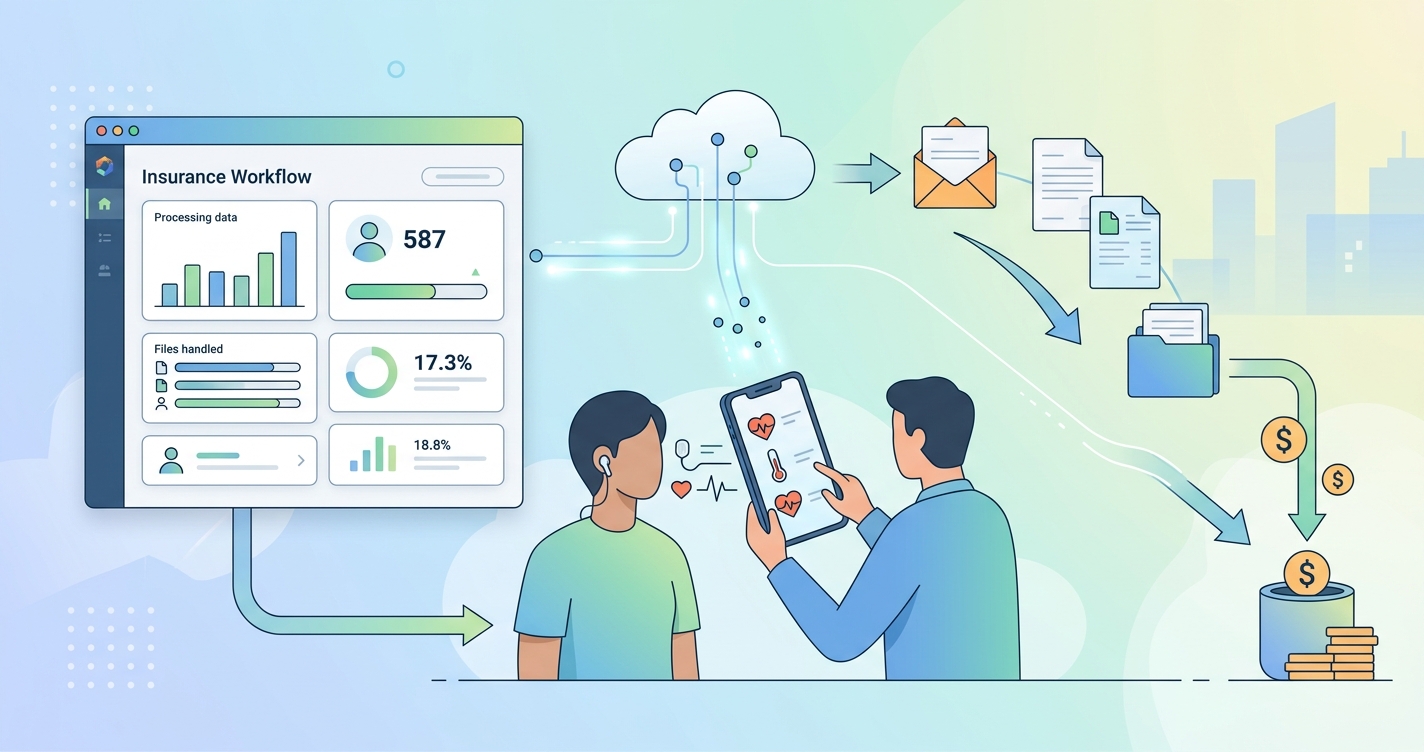
Insurance leaders asking how insurance BPOs reduce per-file costs with automated vitals capture are usually chasing a simple outcome: fewer manual touches per case without losing auditability. That question has gotten more urgent as carriers push more underwriting volume through digital channels while BPO partners still spend too much time on document intake, case setup, follow-up requests, and rekeying health data into downstream systems. Automated vitals capture changes that math because it removes work from the file before the file reaches a human queue.
"Up to 95% of policies may undergo straight-through processing without human underwriter involvement." — McKinsey, in research on underwriting productivity and AI in insurance
Why insurance BPO cost per file is mostly a workflow problem
Per-file cost is rarely driven by one expensive step. It usually grows through accumulation.
A file gets opened by an intake team. Data is reviewed and normalized. Missing evidence triggers follow-up. An underwriter or rules engine asks for more context. Someone attaches supporting documents to the policy record. Another person checks whether the file is complete enough for scoring. None of those tasks look dramatic on their own, but together they create a labor-heavy operating model.
That is why automated vitals capture matters more than the raw measurement itself. When health data arrives as structured input rather than as a nurse visit, scanned PDF, or callback workflow, BPO teams can remove several low-value steps at once.
McKinsey has argued that 30% to 40% of underwriter time is often spent on administrative work, not on judgment-heavy risk analysis. Deloitte has made a similar point in its recent underwriting workbench and submission-intake research: automation has the biggest payoff when it handles ingestion, extraction, validation, and formatting before a file enters the main workflow. For BPO operators, that is the real opening. The savings do not come from "having vitals." They come from changing how the case moves.
| Cost driver in BPO underwriting | Traditional file handling | Automated vitals capture model | Per-file effect | |---|---|---|---| | Applicant evidence collection | Nurse visit, device logistics, or manual follow-up | Smartphone-based capture built into intake flow | Fewer scheduling and outreach steps | | Data entry | Staff rekeys or transcribes values | Structured payload flows directly into rules and PAS layers | Lower labor per case | | Missing-data review | Frequent incomplete files | Real-time completion checks during capture | Smaller exception queue | | Underwriter prep | Staff compiles case summary | Normalized vitals and decision-ready metadata arrive upstream | Less prep time per file | | Audit trail creation | Notes and attachments assembled later | Timestamps, session IDs, and status codes created automatically | Lower compliance handling cost |
How automated vitals capture removes labor from the file
The cheapest file in an insurance BPO is usually the one that never becomes a manual exception. That sounds obvious, but it changes how teams should think about workflow design.
Automated vitals capture lowers per-file cost in four practical ways:
- It cuts intake labor by capturing health observations at the point of application instead of later in the case.
- It reduces rework because poor-quality or incomplete sessions can be flagged immediately.
- It shortens handoffs between intake, underwriting support, and policy administration.
- It improves straight-through processing rates because the data arrives in a format rules engines can actually use.
ACORD's 2020 Next-Generation Digital Standards release is useful context here. Bill Pieroni said the standards were built for fine-grained business transactions, microservices, and RESTful APIs. That matters because BPO savings appear when health screening data moves like a transaction, not like a document. Once vitals capture becomes an API event with status, provenance, and normalized fields, the BPO can route, score, and archive the file with much less custom handling.
The deeper point is operational. BPO teams are not paid to admire architecture. They are paid to process volume accurately. If automated vitals capture lets a partner eliminate manual indexing, reduce outbound applicant chasing, and push more files into rules-based triage, the cost curve changes fast.
Where BPO savings usually show up first
Not every insurance operation sees the same savings in the same place. In most environments, though, three cost buckets move first.
Intake and case setup
This is the most immediate gain. Deloitte's work on agentic intake and intelligent document processing makes a familiar observation: underwriters and support teams waste time turning incoming evidence into usable fields. If vitals capture happens natively in the application flow, much of that setup work disappears. The BPO no longer has to wait for attachments, classify documents, or extract key numbers from inconsistent formats.
Exception management
Exception queues are expensive because they create hidden touches. A case may look automated at first, then bounce into manual review because a value is missing, a timestamp is unclear, or the evidence source cannot be verified. Automated vitals capture can shrink that queue when the session enforces completion logic in real time and writes clean metadata alongside the observation.
Underwriter support labor
BPO staff often spend time packaging files for underwriters rather than making decisions themselves. Clean vitals payloads reduce that packaging work. Instead of assembling evidence from multiple channels, the team can pass forward a smaller, more usable file with normalized values, capture context, and a clear case status.
Industry applications
Carrier operations using offshore or hybrid BPO models
Large carriers often send repetitive file work to BPO partners while keeping final authority in-house. In those setups, automated vitals capture helps most when it reduces the amount of low-context work crossing the boundary. A cleaner file means fewer back-and-forth cycles between carrier and partner teams.
MGA and embedded insurance programs
Fast-moving distribution models care about speed as much as cost. If a BPO partner supports intake for an MGA, embedded distributor, or instant-issue workflow, automated vitals capture can improve both. McKinsey's underwriting productivity work points to the same idea: straight-through processing is where the big operating leverage sits. When more files stay in that lane, cost per file and turnaround time usually fall together.
BPO providers supporting legacy carrier systems
Legacy environments are harder. They still benefit, but the savings come from selective structure. The BPO may not be able to send a full clinical object into an old PAS. It can still move a compact summary, timestamp, source ID, and status code while preserving the fuller screening record elsewhere. That is often enough to lower handling cost without forcing a core-system rebuild.
- Best results usually come when the capture flow, rules engine, and PAS handoff are designed together.
- Savings get diluted when vitals are captured digitally but still turned into documents for downstream teams.
- BPO economics improve most when the operating model tracks touchless completion, exception rate, and average handling time at the case level.
Current research and evidence
The public evidence base on "per-file cost" is not as clean as a carrier's internal finance model, but the directional research is strong.
McKinsey has reported that automation can reduce insurance operating expense by roughly 40% over a decade while increasing processing speed by 60%, and its underwriting research has suggested that up to 95% of policies may be handled through straight-through processing in the right environment. That does not mean every carrier or BPO will hit those numbers. It does mean the industry has a credible benchmark for the upside available when routine file work is removed.
Deloitte's recent underwriting research has focused on the same operational bottleneck from another angle. Its work on the "underwriter's edge" and submission-intake automation argues that ingestion, extraction, validation, and formatting are still consuming too much staff time. For BPOs, those are exactly the tasks that push cost per file upward. Automated vitals capture is useful because it turns one chunk of health evidence into structured, pre-validated intake rather than another manual artifact.
ACORD contributes the standards lens. In 2020, the organization said its Next-Generation Digital Standards were designed for JSON, YAML, microservices, and RESTful APIs. That is not just technical housekeeping. It is a cost issue. Files become cheaper when the same data can be passed once and reused across intake, scoring, servicing, and audit layers without repeated translation.
I keep coming back to one boring truth here: BPO savings are usually not glamorous. They come from fewer retries, fewer handoffs, and fewer people touching the file just to make it legible for the next system.
The future of insurance BPO cost reduction with vitals capture
The next phase will probably separate strong BPO partners from generic ones.
A generic BPO can still throw labor at intake. A stronger one will redesign the file so less labor is needed in the first place. That means tighter integration between digital application flows, rules engines, and downstream policy systems. It also means measuring costs at the file level with more honesty. If an operation claims it has automated underwriting but still relies on manual setup, manual reconciliation, and manual evidence packaging, the economics will eventually catch up with it.
Automated vitals capture will matter most in workflows where:
- the applicant can complete a health step during the original application
- the resulting payload is structured enough for automated scoring or routing
- poor-quality sessions are trapped early instead of flowing downstream
- BPO partners can pass a compact, audit-ready record into carrier systems
That is a less flashy story than "AI transforms underwriting," but it is the one operations teams actually live with.
Frequently Asked Questions
How do insurance BPOs reduce per-file costs with automated vitals capture?
They remove labor from intake, reduce manual data entry, shrink exception queues, and help more cases move through straight-through processing instead of manual review.
Where do BPO teams usually see the first savings?
The first savings usually appear in case setup, follow-up handling, and underwriter support work. Those are the places where structured digital evidence replaces manual gathering and formatting.
Does automated vitals capture only help modern API-first insurers?
No. API-first platforms get the cleanest benefit, but legacy carriers can still lower cost if they pass a smaller structured summary into the core system and keep the richer screening record in an adjacent service.
What should BPO operators measure after rollout?
They should track touchless completion rate, average handling time per file, exception rate, resubmission rate, and the share of files that reach rules-based decisioning without manual intervention.
For insurers and underwriting vendors that want BPO-friendly intake flows instead of more manual case handling, Circadify's custom underwriting and scoring environments are built to fit API-led insurance operations. Related reading: 5 Integration Patterns for Adding Vitals Data to Policy Admin Systems and FHIR vs Proprietary Formats: How to Model Health Screening Payloads.